What exactly is BOSEC certification?
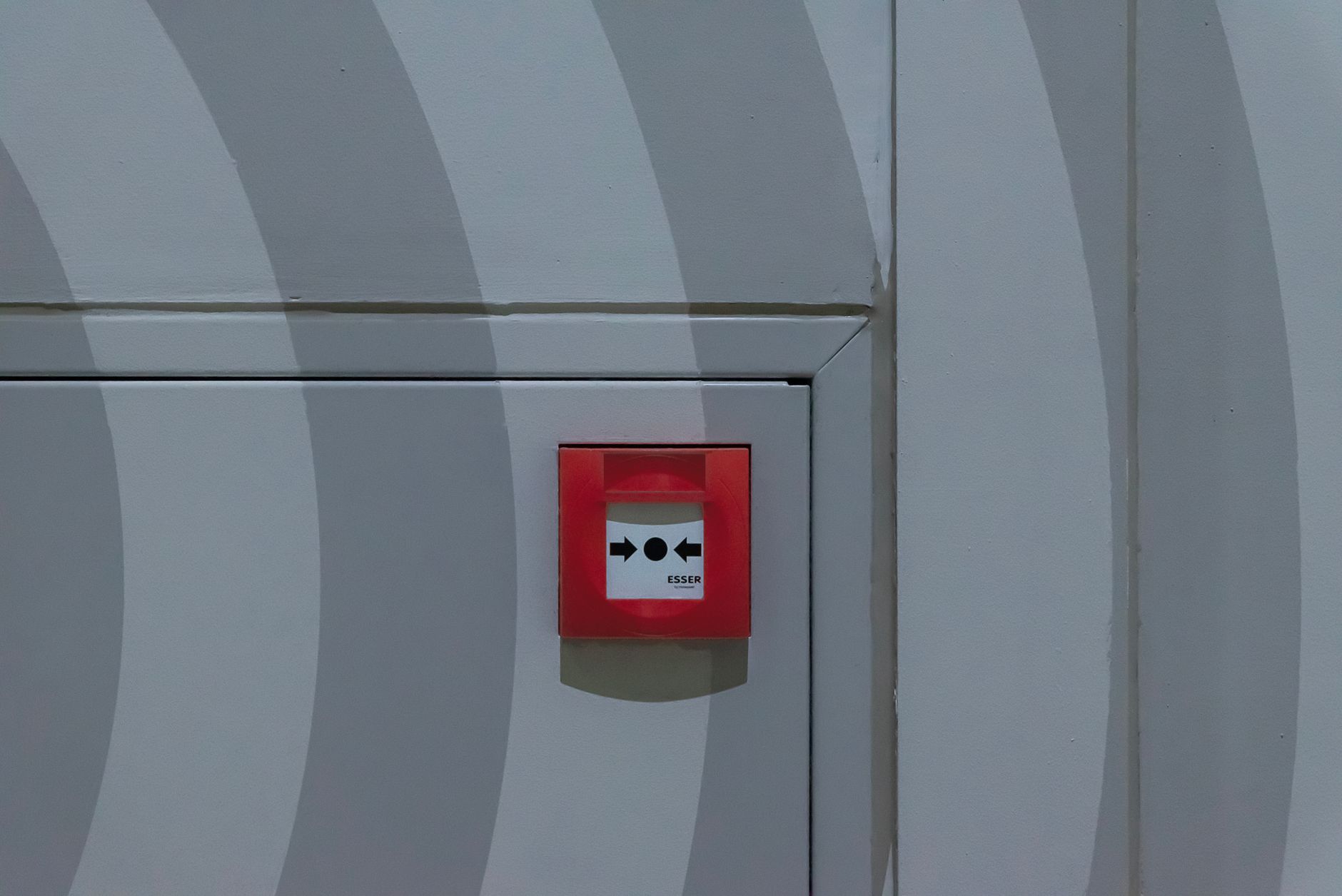
The BOSEC certification is a Belgian label awarded to fire detection products (smoke detectors, heat detectors, detection control panels, sirens, manual call points) that demonstrate their compliance with the European standards of the NBN EN 54 series. The scheme is managed by ANPI, the Belgian approval body.
Concretely, a manufacturer has its product tested in a laboratory, then ANPI verifies that production remains consistent over time through factory audits. The certified product bears the BOSEC logo accompanied by a certificate number. It is a product certification, comparable in principle to other European quality marks, but specific to the Belgian market and recognized by the country's fire prevention stakeholders.
Does BOSEC certify the product or the complete installation?
BOSEC certifies only the product, never the installation as a whole. A BOSEC detector installed by an installer who does not respect the rules of cabling, positioning or zoning does not result in a compliant installation, even if each component bears the logo.
The quality of the installation falls under another reference framework: the NBN S 21-100-1 standard, which sets the rules for the design and installation of fire detection systems (positioning of detectors according to room geometry, sectorization, backup power supply, fire-resistant cabling). Maintenance and periodic inspections once the installation is in service fall under NBN S 21-100-2.
A solid safety file therefore rests on two distinct pillars: BOSEC certified equipment, and an installation carried out in accordance with NBN S 21-100-1. One without the other is not sufficient.
What is the legal scope of BOSEC in Belgian safety files?
BOSEC is not, as such, an obligation written article by article in the Royal Decree of 7 July 1994. This decree sets the basic fire prevention standards and classifies buildings as low, medium and high, but it refers to NBN standards for technical detection requirements.
In practice, the emergency zones (hulpverleningszones) examine safety files and compliance reports during their reviews and periodic inspections. They rely on the NBN S 21-100-1 and -2 standards, which themselves presuppose the use of certified equipment to guarantee the announced reliability of the system. A non-certified product complicates the establishment of proof of compliance, which weakens the file presented to the emergency zone, insurers or the prevention advisor.
BOSEC certification therefore functions as a piece of technical evidence in a broader regulatory framework, not as an autonomous legal obligation.
What are the risks of installing non-BOSEC certified detection equipment?
Installing non-BOSEC certified equipment first exposes to a refusal of compliance during the emergency zone inspection, which may require the replacement of equipment before issuing a favorable opinion. The building then remains in non-compliance until the correction is made.
This also exposes the prevention advisor and the operator to a justification difficulty in case of fire: if the installation did not function as expected, the absence of equipment certification weakens the operator's position with their insurer, who may invoke a failure in risk management.
Finally, a non-certified product has not been subjected to the reliability, aging resistance and manufacturing consistency tests required by the BOSEC scheme. The risk is therefore not only administrative: it is also the actual reliability of detection in case of fire outbreak that is no longer guaranteed by an independent third party.
How to verify that equipment is BOSEC certified?
Verification involves checking the BOSEC logo and certificate number affixed to the product or its technical documentation, cross-referenced with the list of certified products published by ANPI. Each certified reference (detector, control panel, output module) is listed there with its manufacturer and the certificate validity date.
A professional installer must be able to provide, for each installed component, the corresponding certification sheet. This traceability must appear in the technical file given to the operator, a file that the emergency zone may request to consult during a periodic inspection.
It is also useful to check the certificate date: a product may have lost its certification if the manufacturer has not renewed the follow-up audits, even if the old packaging still displays the logo. Doubt should always be resolved with ANPI rather than on the label alone.
BOSEC and NBN S 21-100: what is the link between the two?
BOSEC and the NBN S 21-100 standard complement each other without overlapping: BOSEC certifies that the product is reliable in itself, NBN S 21-100-1 certifies that this product is correctly implemented in the building concerned, and NBN S 21-100-2 governs its maintenance over time.
A compliant detection system requires all three elements together: BOSEC certified equipment, design and installation compliant with NBN S 21-100-1, maintenance contract respecting NBN S 21-100-2. Removing one of the three pillars opens a breach in the safety file, even if the other two are impeccable.
For an operator, the question to ask their installer is therefore never only "is the equipment BOSEC certified?" but also "does the installation comply with NBN S 21-100-1, and who ensures its follow-up according to NBN S 21-100-2?".