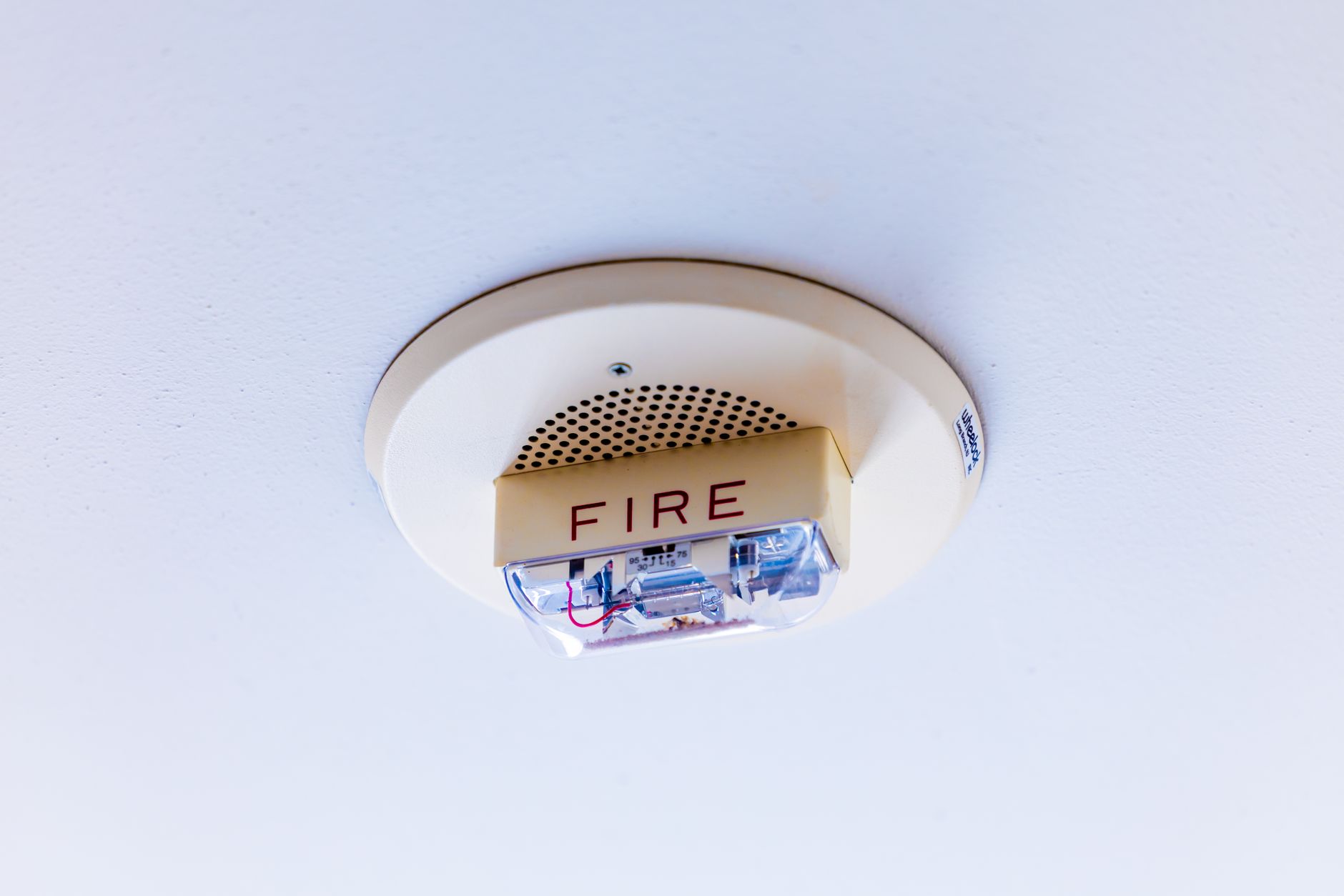
What is a change of use in terms of fire detection?
A change of use refers to any modification of the actual use of a premises or building, regardless of structural works: offices converted into a restaurant, a warehouse reconverted into a production workshop, an administrative floor that has become a training space with public access. The existing fire detection installation was designed, dimensioned and installed according to the original use: nature of materials present, occupancy density, presence schedules, probable ignition sources. Changing the use without reviewing these parameters amounts to operating a system calibrated for a risk that no longer exists. NBN S21-100-1 governs the design and installation of fire detection precisely based on the building's risk analysis: any substantial modification of this analysis calls into question the relevance of the zoning, the type of detectors and the alarm scenarios initially selected.
Why does a change of destination require a new risk analysis?
A change of destination requires a new risk analysis because the fire load, the number of occupants and potential ignition sources change, often without the building structure being affected. An inert storage warehouse converted into a workshop with machines, solvents or welding stations sees its fire load and ignition risk increase significantly, even if the walls and roof remain identical. An office converted into a hospitality room introduces kitchens, denser public flows and night-time occupancy hours. The Royal Decree of 7 July 1994 establishing basic standards requires that prevention measures be proportionate to the actual risk of the building, classified according to its height (low, medium or high-rise building) but also according to its use. A risk analysis frozen at the time of construction no longer reflects the operational reality after a change of use, which legally weakens the operator in the event of a loss.
What concrete examples of change of use require an update of the fire safety system?
Certain changes of use systematically require a revision of the fire safety system (FSS), even in the absence of major works, because they radically modify the initial risk profile. The table below illustrates the most frequent cases encountered in Belgian professional buildings.
| Original use | New use | Main impact on risk | What needs to be reviewed |
|---|---|---|---|
| Offices | Hospitality (restaurant, kitchen) | Presence of heat sources, grease, night-time public | Detection adapted to kitchens, zoning, smoke extraction |
| Inert storage warehouse | Production workshop, carpentry | Fire load, dust, ignition sources | Type of detectors, possible automatic extinguishing |
| Administrative floor | Training room, event space | Occupant density, variable schedules | Alarm scenarios, evacuation, staffing levels |
| Retail | Storage of flammable products | Nature of stored materials | Complete risk analysis, compartmentation |
In each of these cases, the system installed originally no longer corresponds to the actual use of the building.
What does NBN S21-100-1 say about adapting an existing installation?
NBN S21-100-1 specifies that the design of a fire detection installation is based on a risk analysis specific to the building and its operation, and that any modification of this operation must be evaluated to verify whether the installation remains compliant with its protection objective. The standard does not set an automatic trigger linked solely to construction works: it is the change in actual risk, not the nature of the works, that determines the need for a revision. NBN S21-100-2, which covers maintenance and inspection, also assumes that the installation being inspected still corresponds to the use for which it was designed: a technician inspecting an installation that has become unsuitable for the new use cannot certify that it properly protects the building. In practice, this means that a change of use must trigger a re-reading of the initial technical file, even if no wall has been moved.
Who should carry out this new risk analysis and update?
The new risk analysis and the update of the detection system are the joint responsibility of the building operator, their prevention advisor and, for the technical part, a qualified installer working according to NBN S21-100-1. The Code on Well-being at Work (Book III, Title 3, devoted to fire prevention in the workplace) requires the employer to continuously adapt their risk analysis to the operational reality, which includes any change of use. In parallel, it is recommended to seek the advice of the territorially competent emergency zone (hulpverleningszone), which may require adaptations before the new use is put into service. A certified installer, ideally with BOSEC-labelled equipment, is best placed to translate the new risk analysis into zoning, choice of detectors and appropriate alarm scenarios, and to document these choices in the building's technical file.
What are the risks of not updating fire detection after a change of use?
Failing to update fire detection after a change of use exposes the building to protection unsuited to the actual risk, with potentially serious human, legal and economic consequences for the operator. On the human level, a system designed for standard office use poorly detects a fire outbreak in a hospitality kitchen or in a workshop containing combustible dust, which delays the alarm and evacuation. On the legal level, in the event of a loss, the operator who has not updated their risk analysis despite a documented change of use is exposed to liability, as the existing installation cannot be presented as compliant with NBN S21-100-1 for the new use. On the economic level finally, the European Fire Sprinkler Network recalls that 70% of companies affected by a major fire never recover, with fire being among the top ten causes of bankruptcy in Belgium: a poorly assessed risk after a change of use directly increases this probability.