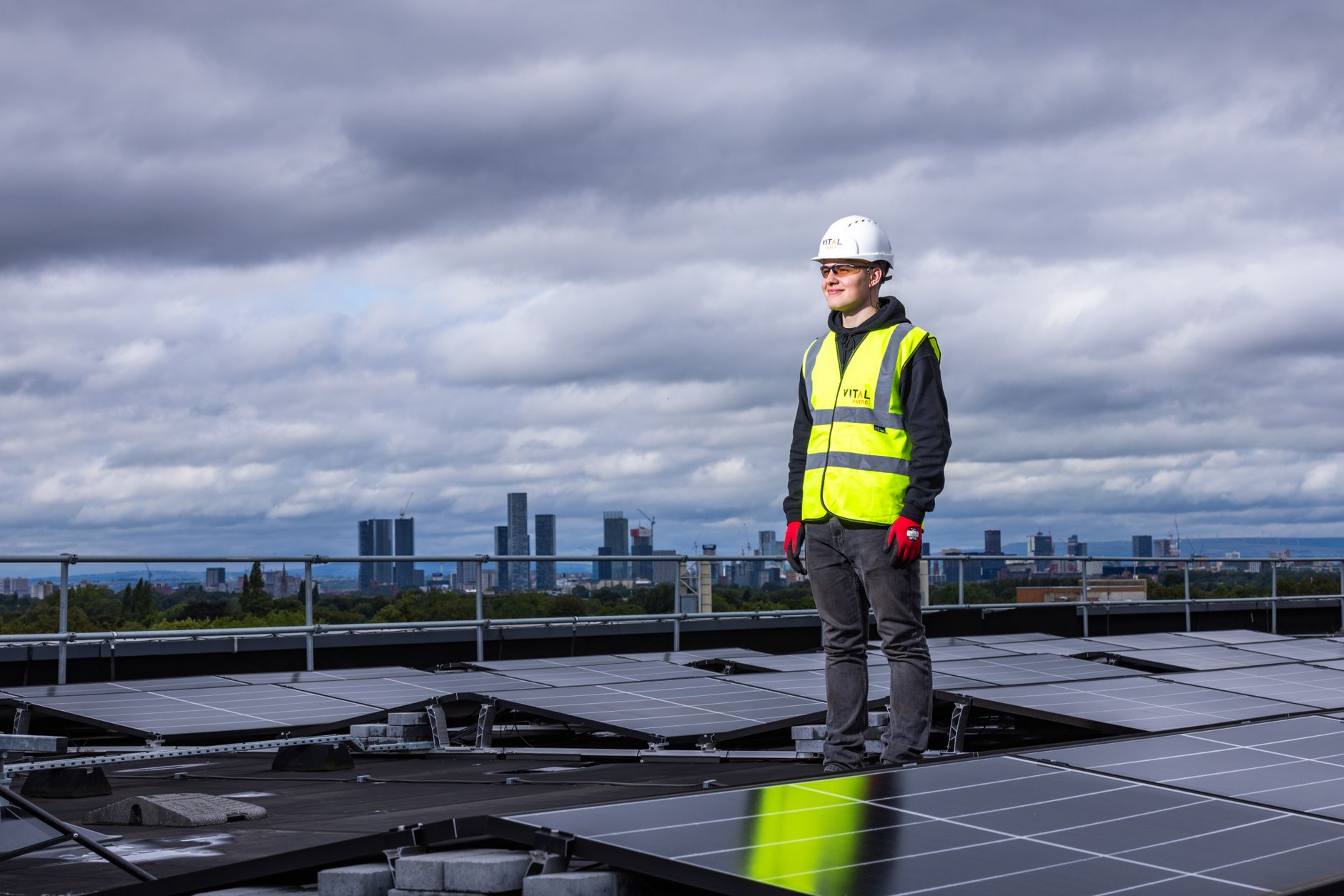
What are the specific fire risks of a roof equipped with photovoltaic panels?
A rooftop photovoltaic installation adds an electrical risk specific to its technology: the direct current (DC) cables connecting the panels to the inverter remain energized as long as the panels receive light, even after a general power cut to the building's electrical network. An insulation fault, a poorly crimped connector or a cable damaged by UV rays or rodents can initiate an electrical arc. This arc heats locally, sometimes without triggering conventional protections calibrated for overcurrents. The heat then spreads into the attics and technical ducts where these cables run, before visible smoke appears on the facade or in occupied spaces. It is this gap between the fire start and its detection on the facade that justifies a differentiated approach for this type of roof.
Why is a direct current electrical arc more difficult to detect than a conventional fault?
A direct current arc does not extinguish naturally, unlike an alternating current arc which passes through a voltage zero several dozen times per second. The DC arc is self-sustaining, rises in temperature and can persist without triggering standard circuit breakers, which react to overcurrent and not to the electrical signature of an arc. Its detection requires dedicated devices, arc fault detection devices (often designated AFDD), installed upstream on the panel string or at the DC enclosure level. These devices belong to the electrical installation itself, not to the fire detection system as defined in NBN S21-100-1. Their absence, common in photovoltaic installations installed before this technology became widespread, leaves a blind spot that only complementary thermal or optical detection in the attics can partially compensate for.
What risks for firefighter intervention on a photovoltaic roof?
Access by emergency services to a photovoltaic roof is complicated by the physical presence of the panels and by the maintenance of electrical voltage even after the network is cut off. Firefighters risk electrocution if they need to pierce or cut through a roof covered with panels still powered by daylight. The available surface for smoke ventilation and for progression is reduced by the rows of panels, which often occupy almost all of the usable roof area. This is why the territorially competent emergency zone (hulpverleningszone) must be consulted upstream of the project to define clear circulation paths between the rows, locate rapid shutdown devices and ensure that identification signage for energized zones remains visible and accessible even in case of smoke.
How to adapt fire detection in attics and technical ducts related to photovoltaics?
Detection must primarily target the volumes where DC cables transit between the panels and the inverter: attics, roof voids, vertical or horizontal technical ducts and the inverter room. A conventional isolated optical smoke detector is often insufficient in these volumes, exposed to dust and sometimes poorly ventilated, which promotes false alarms or conversely late detection. It is preferable to combine linear heat detection along cable routes with point detection in the inverter technical room, where the risk of overheating in case of fault is concentrated. This adaptation must be integrated into the overall risk analysis carried out with the prevention advisor, and not treated as an isolated addition to the existing design according to NBN S21-100-1.
Which detection technologies should be prioritized according to the zone concerned?
The choice of technology depends on the zone exposed to photovoltaic risk, each volume requiring a different response in terms of detection.
| Technology | Application zone | Main advantage | Limitation |
|---|---|---|---|
| Linear heat-sensing cable | Attics, DC cable routes | Detects continuous temperature rise along the entire route | Does not detect smoke, reacts only to heat |
| Arc fault detection device (AFDD) | DC enclosure, panel string | Cuts the arc before thermal propagation | Part of the electrical installation, not the fire detection system |
| Optical smoke detector | Technical duct to inverter room | Early detection before temperature rise | Sensitive to dust, more frequent maintenance required |
| Multi-criteria smoke and heat detection | Inverter or transformer room | Reduces false alarms | Higher acquisition cost |
This combination must be validated on a case-by-case basis according to the actual configuration of the attics and the type of inverter installed.
What Belgian regulations govern fire detection for these installations?
There is no specific regulatory provision in Belgium for photovoltaics in fire detection: the Royal Decree of 7 July 1994 establishing basic standards for fire and explosion prevention applies according to the building classification (low, medium or high), and the design of the detection system remains governed by NBN S21-100-1. Adaptation to photovoltaic risks therefore falls under the risk analysis conducted with the prevention advisor, who must integrate this specific electrical risk into the overall file, in connection with the Code on Well-being at Work, Book III, Title 3, devoted to fire prevention in the workplace. The competent emergency zone remains the contact to consult to validate roof access and shutdown devices, before submitting the project.
How to organize periodic inspection of detection in these zones?
Periodic inspection of the detection system must explicitly include zones related to photovoltaics, and not only detectors in occupied spaces. NBN S21-100-2 sets the general procedures for maintenance and inspection of the fire detection system, which also apply to detectors installed in attics or technical ducts. In these volumes, dust accumulation, the presence of insects or pests and sometimes difficult access make cleaning and verification more demanding than in a conventional office. It is recommended to integrate into the maintenance plan a visual inspection of DC connectors and cable routes, in coordination with the photovoltaic installer, and to verify that the shutdown points identified for firefighters remain accessible and properly signposted after each maintenance intervention on the panels.