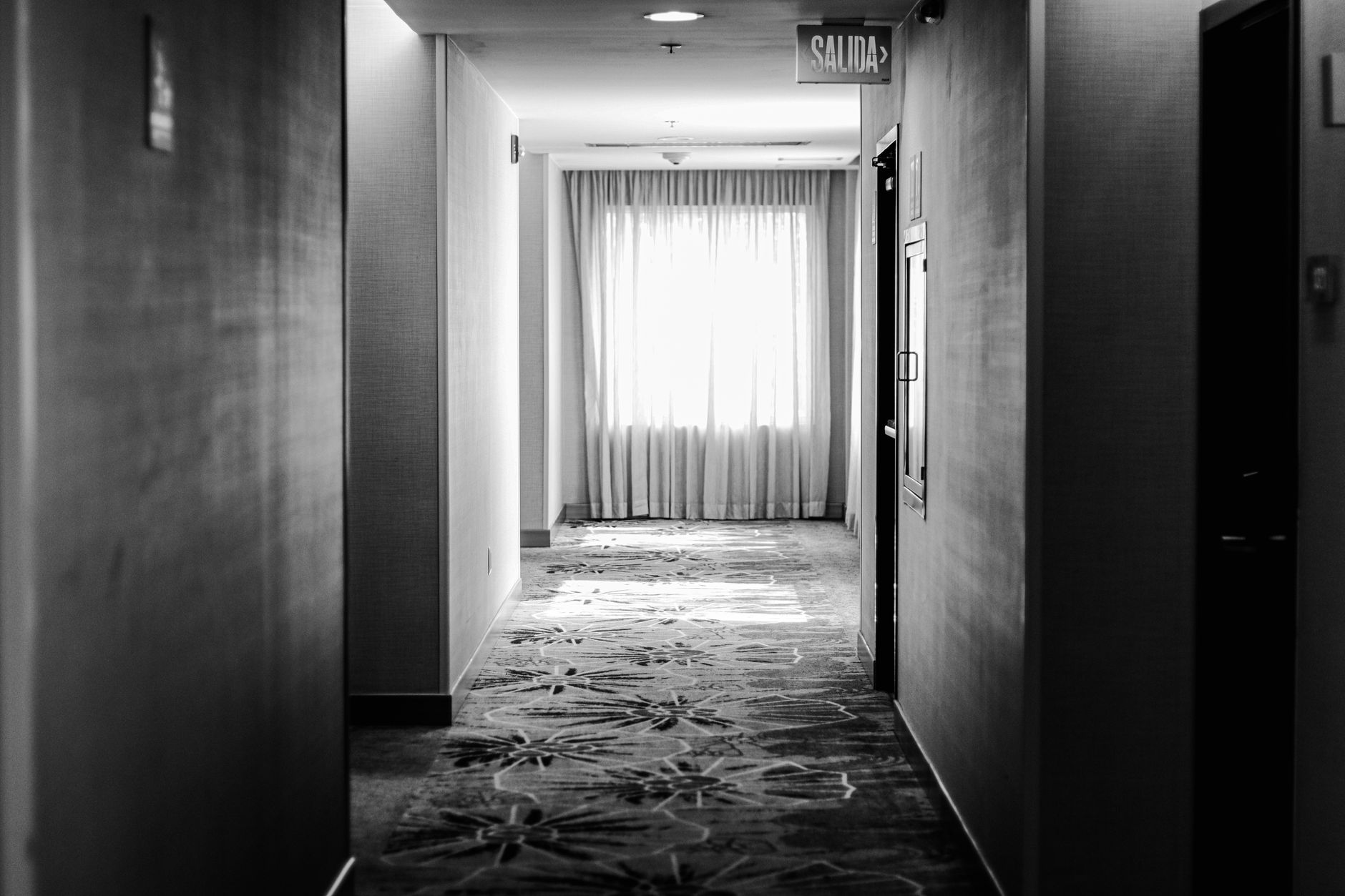
Why is a hotel treated differently from other buildings regarding fire risk?
A hotel accommodates sleeping occupants: people who are unfamiliar with the premises, sometimes sleep in darkness and lose much of their vigilance during the night. In Belgium, 70% of fire victims die at night due to smoke, and half of the deaths recorded in 2025 occurred during nocturnal fires. It is this combination—sleeping persons and unfamiliarity with the building—that justifies stricter detection and alarm requirements than in a standard office building, where occupants are generally awake and know their escape routes. Detection must therefore alert early enough to allow time for awakening, awareness, and then organised evacuation.
How does the Royal Decree of 7 July 1994 classify a hotel?
The Royal Decree of 7 July 1994 establishing basic standards for fire and explosion prevention classifies all buildings, including hotels, according to their height: low-rise building (height not exceeding 10 metres), medium-rise building (between 10 and 25 metres) and high-rise building (beyond 25 metres). This height is measured between ground level and the floor of the highest storey accessible to occupants. The higher the building, the more stringent the requirements for compartmentation, evacuation and detection, particularly because vertical evacuation becomes longer and more complex. A four-storey hotel in a city centre and a fifteen-storey hotel therefore do not fall under the same requirements, even though the accommodation activity is identical.
What detection requirements apply in bedrooms and corridors?
Fire detection in a hotel must cover at minimum common circulation areas (corridors, staircases, halls) and extends to bedrooms according to the building classification and risk analysis. The installation design follows standard NBN S21-100-1, which governs the design and installation of fire detection systems in Belgium. In a hotel context, common practice consists of organising a two-stage alarm: a restricted signal that first alerts night staff, responsible for verifying the reality of the incident, then a general signal that triggers evacuation of all occupants if necessary. This organisation limits unnecessary evacuations linked to false alarms (shower steam, cigarettes) whilst guaranteeing rapid response in case of actual fire outbreak, which is particularly important when occupants are sleeping.
Which particular risk areas require enhanced protection?
In a hotel or horeca establishment, certain areas concentrate significantly higher fire risk than the rest of the building and require specific protection. Professional kitchens are the clearest example: deep fryers, cooking surfaces and extraction hoods generate heat, grease and cooking fumes that can trigger false alarms with standard optical detectors. Suitable detectors (thermal or multi-criteria) are preferred there and, depending on the risk analysis validated by the emergency zone (hulpverleningszone), a localised automatic suppression system on hoods and cooking surfaces. Bedrooms present a diffuse but permanent risk (smokers, candles, electrical appliances, chargers) that justifies systematic coverage by autonomous or connected detection. Laundries, boiler rooms and technical rooms complete the list of priority areas to monitor.
What is the link with regional regulations on tourist accommodation?
In Belgium, the Regions (Wallonia, Flanders, Brussels) have competence for tourist accommodation and each has its own legislation governing the operation of hotels and tourist lodgings. These regional texts articulate with the Royal Decree of 7 July 1994: they often condition obtaining or maintaining a tourist classification (category, stars) on compliance with the building's fire safety requirements, controlled by the territorially competent emergency zone (hulpverleningszone). Concretely, a hotel operator must therefore satisfy both federal basic standards on detection and evacuation, and the operating conditions specific to their Region. In case of doubt about regional requirements applicable to a specific establishment, it is recommended to consult directly the competent regional tourism administration, whose texts evolve and do not lend themselves to reliable generalisation.
What periodic inspections and maintenance are required for a hotel?
A fire detection installation in a hotel must undergo periodic inspection and regular maintenance in accordance with standard NBN S21-100-2, which sets out maintenance procedures for detection installations. Using equipment and installers certified BOSEC provides assurance of compliance with Belgian standards, with the ANPI organisation involved in certification and inspection of these systems. Independent of this technical maintenance, the emergency zone (hulpverleningszone) issues an opinion before the establishment opens and carries out periodic inspection visits to verify that detection, evacuation and particular risk areas remain compliant over time. For hotel staff, the Code on Well-being at Work (Book III, Title 3) additionally imposes organisation of fire prevention in the workplace, distinct from obligations towards guests but complementary in practice.