What regulatory fire detection obligations apply to libraries and archive centres in Belgium?
Libraries, archive centres and documentation centres are subject to the Royal Decree of 7 July 1994 establishing basic standards for fire and explosion prevention, which applies according to the building classification (low-rise, mid-rise or high-rise). The design and installation of fire detection systems follow standard NBN S21-100-1. When the establishment employs staff, the Code on Well-being at Work (Book III, Title 3) additionally requires a specific fire risk analysis for workstations and storage areas.
The territorially competent emergency zone (hulpverleningszone) provides an opinion on the file and carries out periodic inspections of the building. For collections of high heritage value, it is common for the prevention adviser to request additional advice from ANPI, particularly regarding the choice of automatic suppression system.
Why is early detection particularly critical for documentary collections?
Early detection is crucial because paper, leather and historic media are irreversibly destroyed, whether by combustion, smoke or extinguishing water itself. A fire detected at the smouldering stage, before visible flame, allows intervention before acidic smoke attacks pigments and bindings, and before massive water suppression becomes necessary.
In Belgium, approximately 10,000 fires occur annually in buildings, an order of magnitude recalled by UGent in the absence of systematic data collection. For a documentary collection, the real issue is not the frequency of incidents but their reversibility: a wetted then dried document warps and moulds, a smoke-damaged document is permanently contaminated by soot. Hence the value of detection that acts well before the trigger threshold of a conventional suppression system.
What detection technologies are suitable for conservation storage and archive rooms?
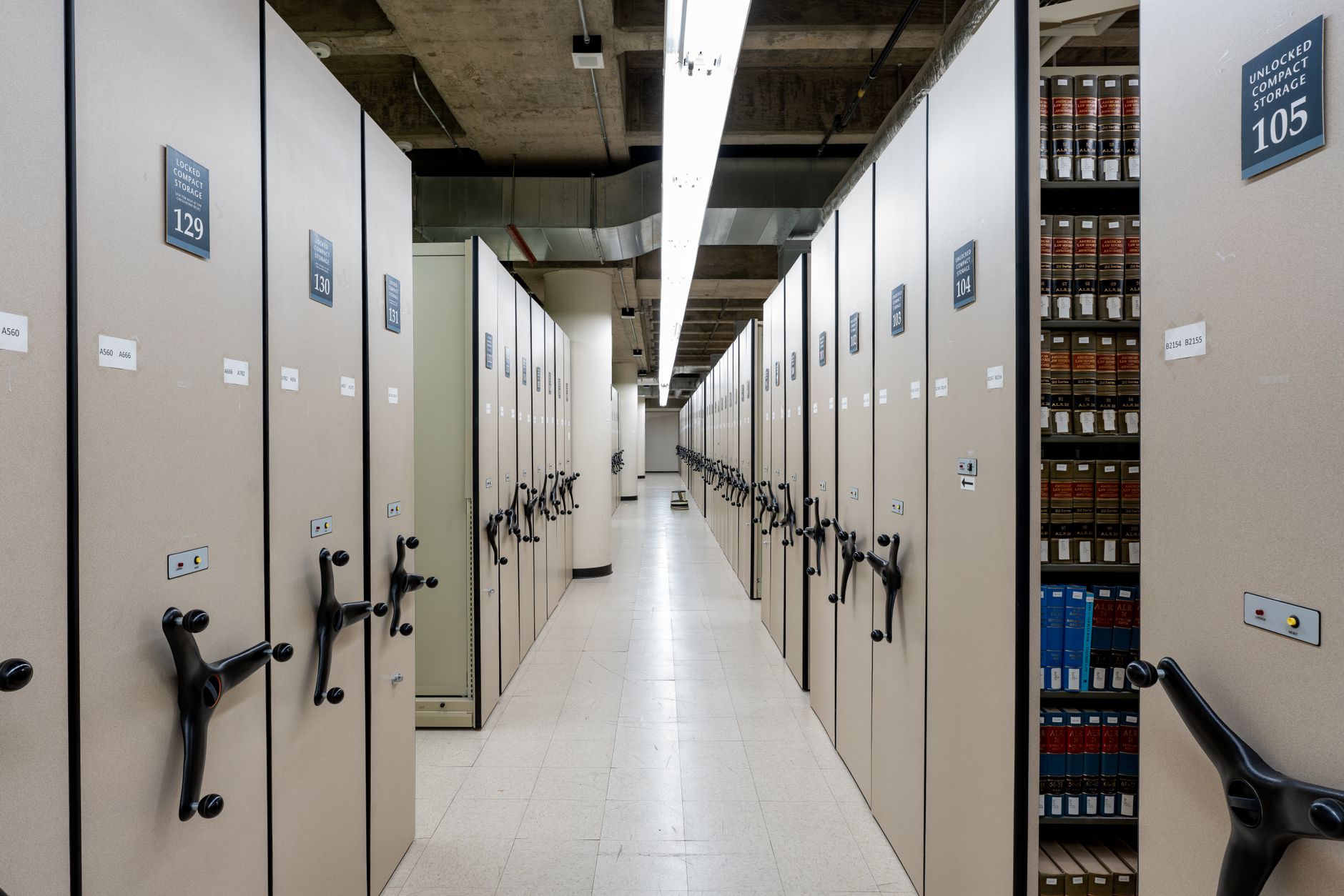
Conservation storage facilities require detection capable of identifying a smouldering fire well before visible smoke appears, which conventional point detectors do not always allow in large volumes with dense shelving. The technical choice depends on room configuration and ceiling height.
| Technology | Principle | Value for archives |
|---|---|---|
| Optical smoke detector | Light scattering in an optical chamber | Standard, simple, limited for large volumes |
| Multi-criteria detector | Combines smoke, temperature, sometimes CO | Reduces false alarms from paper dust |
| Aspirating smoke detection | Pump drawing ambient air to a highly sensitive central sensor | Detects smouldering fire very early, suited to high and compact shelving |
| Linear heat detection | Cable sensitive along its entire length | Useful along cable trays or false ceilings |
Aspirating smoke detection is often preferred in dense conservation storage, as it allows human intervention before automatic suppression is even triggered.
What automatic suppression is compatible with document preservation?
Suppression compatible with documentary collection preservation is termed clean: it extinguishes fire without leaving residue and without using large quantities of water. Conventional water sprinklers, though effective, are generally avoided in heritage conservation storage due to the risk of water damage throughout the room.
| System | Agent | Impact on documentary collections |
|---|---|---|
| Conventional sprinkler | Water | Effective but extensive water damage, avoid for sensitive collections |
| Water mist | Water atomised into fine droplets | Very reduced water quantity, effective cooling |
| Inert gas (nitrogen, argon or mixture) | Oxygen level reduction | Does not damage paper or electronics, no residue |
| Clean chemical agent | Gaseous chemical suppression agent | Rapid action, no residue, requires sealed room |
The choice between inert gas, clean chemical agent and water mist depends on room volume, its air-tightness and possible staff presence. These systems must be designed in coherence with the installed early detection, since gas flooding suppression requires confirmation time before discharge.
How does building classification influence requirements applicable to a library?
Building classification under the Royal Decree of 7 July 1994 distinguishes low-rise buildings (height up to 10 metres), mid-rise buildings (between 10 and 25 metres) and high-rise buildings (beyond 25 metres). This height is measured at the level of the highest floor accessible to the public or staff.
A library installed in a historic low-rise building is not subject to the same compartmentation and evacuation requirements as an archive centre housed in a high-rise storage tower. The higher the building classification, the more stringent the requirements for comprehensive detection, compartmentation and smoke extraction. It is this classification that determines, upstream, the level of protection that standard NBN S21-100-1 imposes for detection system design.
Who inspects and maintains the detection installations of a documentation centre?
Maintenance and inspection of fire detection installations fall under standard NBN S21-100-2, which governs operations to be performed by a certified installer and internal checks assigned to the operator. Using a company with BOSEC certification ensures that installation and maintenance meet Belgian standard requirements.
The territorially competent emergency zone intervenes during periodic building inspections and may impose additional measures depending on conservation storage configuration. For a documentation centre, it is common for the prevention adviser to maintain a separate file listing specific risk areas (climate-controlled reserves, binding rooms, server rooms housing digital catalogues), as these spaces often require enhanced detection compared to public reading rooms.
Does a library with heritage collections require a specific fire risk analysis?
Yes, when the establishment employs staff, the Code on Well-being at Work requires a fire risk analysis conducted with the prevention adviser. For heritage collections, this analysis must specifically address the irreversibility of damage to unique documents and identify areas requiring early detection and clean suppression. The prevention adviser coordinates with the emergency zone and, where appropriate, with ANPI to validate technical choices.
This analysis also covers staff training in specific procedures: early intervention on a smouldering fire, controlled shutdown of climate control systems, and priority salvage protocols for the most valuable items in the collection.