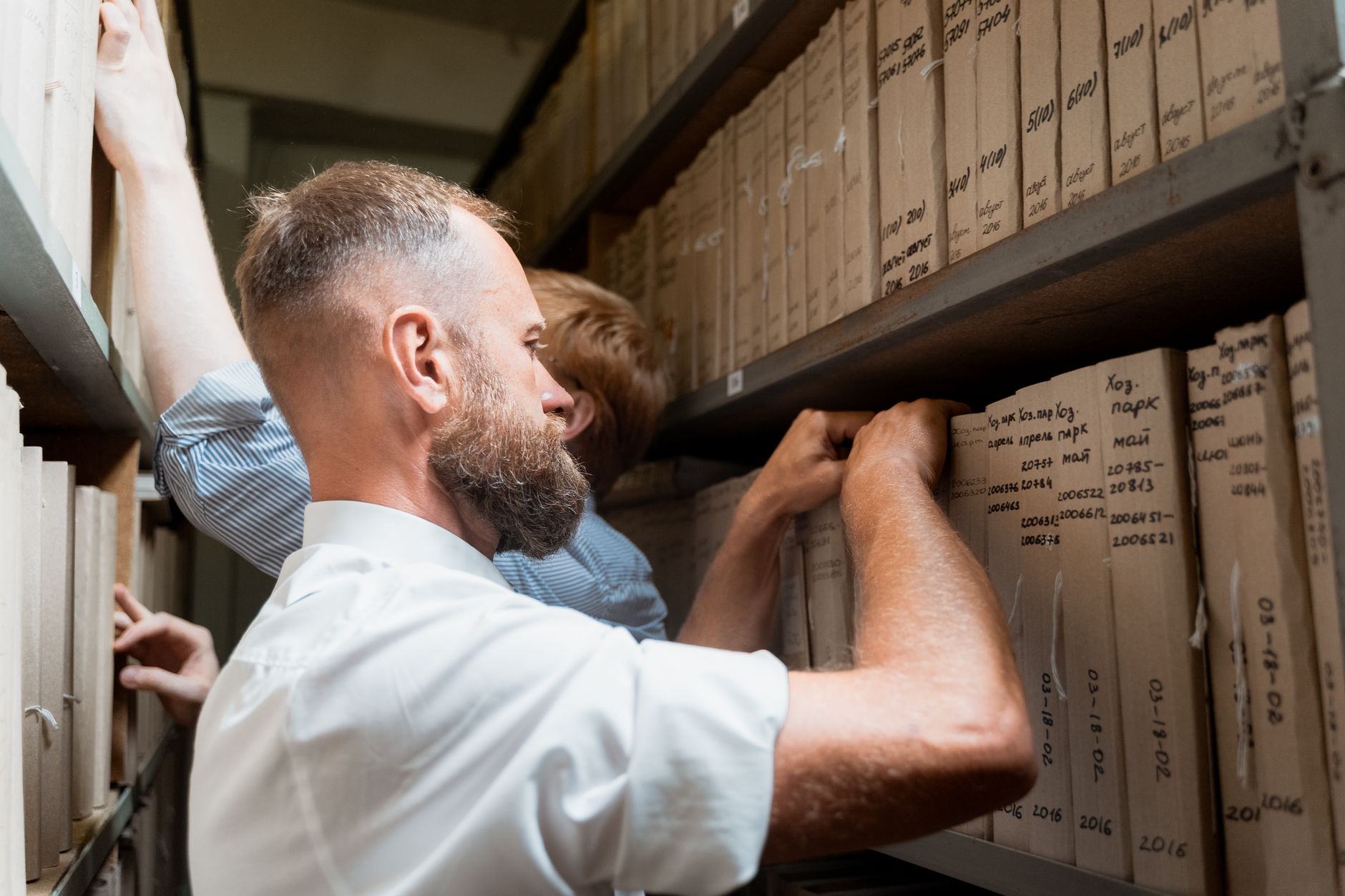
What regulatory obligations apply to libraries, archive centres and museums in Belgium?
These establishments fall, like any building accessible to the public or workplace, under the Royal Decree of 7 July 1994 establishing basic standards for fire and explosion prevention, which classifies buildings as low, medium or high according to their height and imposes compartmentation, evacuation and detection requirements. The Code on Well-being at Work (Book III, Title 3) applies as soon as staff work there, regardless of public access. The competent emergency zone (hulpverleningszone) provides an opinion on the file and carries out periodic inspections. Beyond this common foundation, the nature of collections (manuscripts, works on paper, painted works, paper or microfilm archives) justifies going further than the regulatory minimum: loss is often irreplaceable, unlike a stock of goods or furniture.
Why is very early detection crucial for heritage collections?
Very early detection aims to identify the start of combustion before visible flames appear, at the stage where paper, wood or pigments are only beginning to degrade under the effect of heat or combustion particles. For sensitive collections, every minute gained before intervention reduces the extent of damage, which is often irreversible on an ancient document or work of art. Conventional point detection, optimised to trigger human evacuation, generally reacts too late to preserve the integrity of a collection: it protects people, not necessarily holdings. This is why archive repositories, museum reserves and conservation stores use technologies capable of detecting very low smoke concentrations, well before the threshold of visibility to the naked eye.
What detection technologies are suitable for conservation spaces?
The choice of detector depends on the specific risk of each room: a closed, poorly ventilated archive repository does not have the same constraints as an air-conditioned exhibition hall frequented by the public.
| Technology | Principle | Interest for collections |
|---|---|---|
| Optical point detection | Reacts to light scattering by smoke particles | Basic solution, compliant with NBN S21-100-1, but limited sensitivity to slow-starting fires |
| Aspiration detection (ASD) | Continuously samples air via a network of tubes and analyses it in an internal laboratory | Very high sensitivity, suitable for closed reserves and false floors/ceilings |
| Linear smoke detection | Optical beam crossing a large volume | Useful in large exhibition halls with significant ceiling height |
In all cases, installed detectors must have BOSEC certification attesting their compliance with performance requirements recognised in Belgium.
How does gaseous suppression articulate with fire detection?
Automatic gas suppression is preferred in reserves and repositories of precious collections because it extinguishes without leaving residue or wetting supports. However, its triggering must be secured by double detection logic (two zones or two detector technologies must confirm the presence of fire) before gas release, to avoid inadvertent triggering that would unnecessarily immobilise the room and expose present staff. This delay, combined with a distinct audible and visual alarm preceding release, allows time to evacuate and verify the reality of the incident. The design of this detection, delay and suppression coupling must respect the design principles set by NBN S21-100-1, which frames detector installation according to room configuration and type of risk present.
How to limit water damage related to detection and suppression?
Limiting water damage is a central objective in designing a protection system for heritage collections, because water suppression often damages holdings as surely as fire itself. Choosing gaseous suppression rather than sprinklers in sensitive reserves directly addresses this objective. When a sprinkler network remains necessary elsewhere in the building (circulation areas, offices, technical rooms), strict compartmentation between these zones and collection reserves prevents a failure or triggering in one zone from affecting holdings stored in another. Very early detection plays an additional preventive role here: by identifying a fire start before it gains momentum, it reduces the probability that massive suppression, by water or large quantities of gas, becomes necessary.
What does standard NBN S21-100 provide for maintenance of these installations?
NBN S21-100-2 sets maintenance and periodic inspection requirements for fire detection installations once commissioned, regardless of building occupancy. For a museum, library or archive centre, this regular monitoring is all the more critical as high-sensitivity detectors (particularly aspiration systems) require checking of their fouling and calibration to maintain their very early detection performance. The operator must maintain a technical file demonstrating design compliance with NBN S21-100-1 and traceability of inspections carried out according to NBN S21-100-2. ANPI constitutes a recognised technical reference in Belgium for interpreting these standards and supporting project owners on occupancies with particular heritage risk.