Why do libraries, archives and museums require a different detection approach?
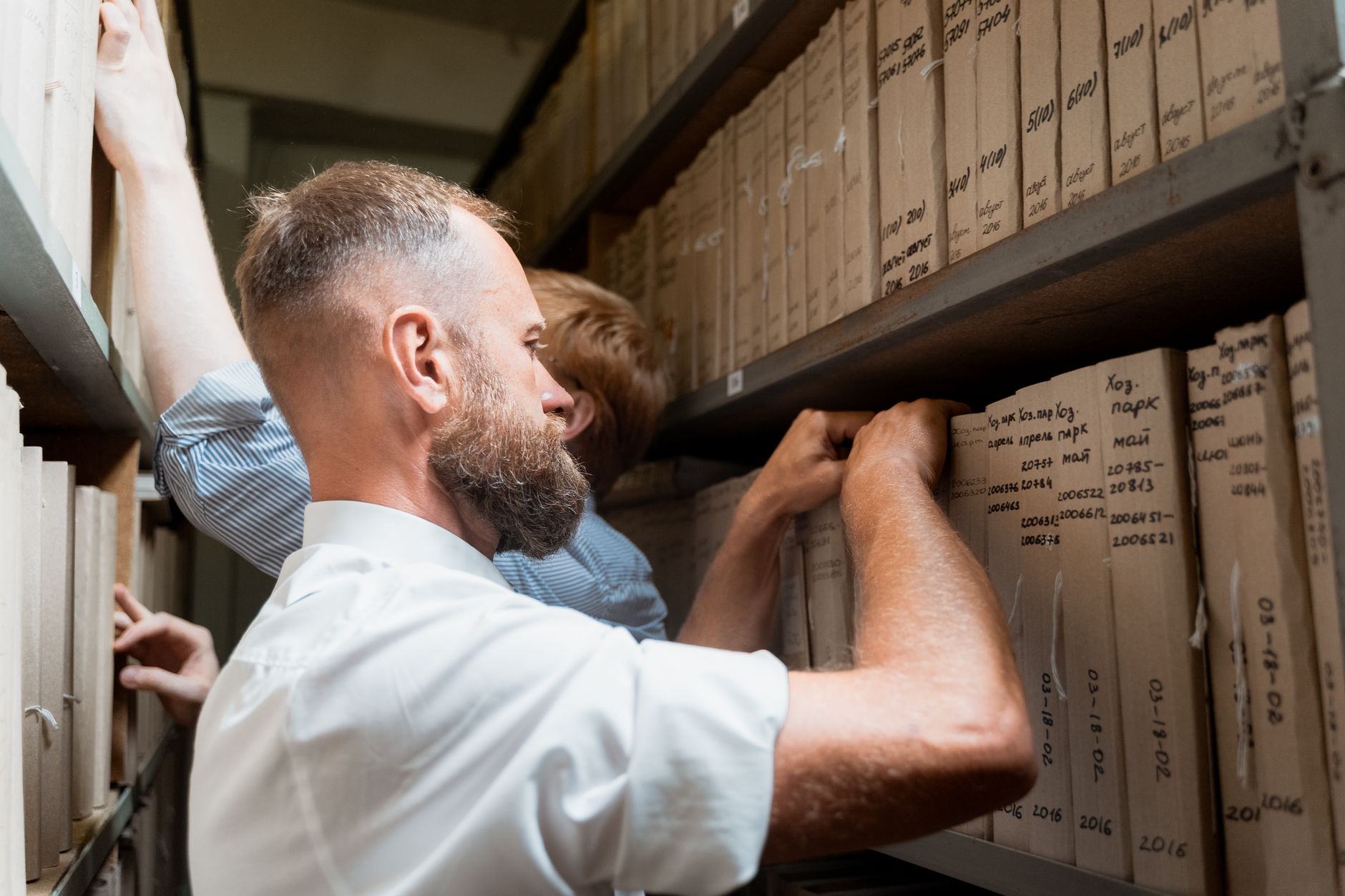
Collections preserved in libraries, archives and museums are by nature irreplaceable: an ancient book, a manuscript or a work on canvas cannot be repurchased like a stock of goods. Paper, textiles and old wood degrade from the first minutes of combustion, and conventional water suppression often causes more damage than the flames themselves. Standard NBN S21-100-1 sets the general principles for designing detection installations, but in these buildings the technical choice (detector type, suppression agent) must integrate the fragility of materials and heritage value. This logic explains why an archive repository or museum reserve justifies more advanced means than a simple optical detector on the ceiling, from the system design phase.
What is aspirating detection and why is it suitable for sensitive collections?
Aspirating detection (ASD system, Aspirating Smoke Detection) continuously samples ambient air through a network of perforated tubes, connected to a very high sensitivity optical unit. It detects smoke particles well before a conventional point detector reacts, which allows detection of slow combustion onset, for example electrical heating in a closed archive cabinet, before any visible flame emission. ASD presents another practical advantage in this type of building: a single tube network can cover complex volumes (high shelving, false ceilings, air conditioning ducts) without multiplying drillings in sometimes listed or protected structures. It is for this combination, very early detection and low intrusiveness on the building, that ASD is regularly selected in museum reserves and heritage archive repositories.
How to avoid false alarms while maintaining very early detection?
Very early detection captures weak signals, which mechanically increases the risk of unwanted triggering if the configuration is not adapted to the environment. The technical response relies on multi-criteria detection (combination of several physical quantities analysed simultaneously) and on staggered alarm thresholds: a technical pre-alarm transmitted to a human monitoring station, then a fire alarm triggering evacuation and automatic systems. In climate-controlled reserves, where ancient paper dust and hygrometry variations can disturb a standard detector, this fine tuning is essential. It must be performed during commissioning and reviewed with each modification of premises occupation (new shelving, air conditioning system change). A system poorly calibrated for this type of environment generates either unwanted alarms that desensitise staff, or conversely, late detection that cancels the benefit of the chosen technology.
Which detection technologies should be compared for a conservation space?
The choice between several detector families depends on the type of room, its ceiling height and the nature of stored materials. The following table summarises options commonly considered for conservation spaces.
| Technology | Principle | Sensitivity | Recommended use |
|---|---|---|---|
| Point optical detector | Light scattering analysis at a point | Standard | Offices, reading rooms, circulation areas |
| Aspirating detection (ASD) | Continuous air sampling via tube network | Very high, early detection | Closed reserves, archive repositories, technical raised floors |
| Linear beam detection | Infrared beam crossing the volume | Standard to high | Large open volumes, high exhibition halls |
| Multi-criteria detection (smoke and temperature) | Combination of sensors analysed together | High, reduced false triggering | Climate-controlled museum rooms, dust-sensitive areas |
The use of ASD does not exclude combining several technologies on the same site, depending on room configuration.
Which suppression solutions limit water damage to irreplaceable collections?
Protection against suppression water is a central issue when the collections concerned are irreplaceable: a poorly chosen automatic suppression system can cause more heritage loss than the fire itself. Several families of means exist, with very different levels of impact on collections.
| Suppression means | Principle | Impact on collections | Typical use |
|---|---|---|---|
| Conventional water sprinkler | Water diffusion over entire triggered zone | High risk of water damage | Storage areas without heritage value |
| Water mist (watermist) | Fine droplets, reduced water volume | Reduced but not zero impact | Mixed rooms with human occupation |
| Gaseous agent (inert gas or clean chemical agent) | Suppression by smothering or inhibition, no liquid residue | Very limited impact on paper, textiles, works | Closed reserves, conservation rooms, archive repositories |
The final choice is always made in consultation with the prevention advisor and, depending on the case, with the opinion of the competent emergency zone (hulpverleningszone), which validates the consistency between detection, compartmentation and suppression means.
What does NBN S21-100-2 provide for maintenance of these installations?
Standard NBN S21-100-2 governs the maintenance and periodic inspection of fire detection installations in Belgium, regardless of building type. For an ASD system installed in a heritage reserve, this maintenance includes notably cleaning the tube network and filters, verification of detection thresholds configured during commissioning, and checking proper operation of the control unit by a competent company. These operations must be recorded, which allows demonstration, in case of inspection by the emergency zone, that the installation has remained compliant with its original configuration. A very early detection system loses much of its benefit if it is not maintained with the same rigour as its initial design, because a clogged filter or drifted threshold distorts the sought sensitivity. The building manager remains responsible for proper execution of this monitoring.
What general Belgian regulatory obligations apply to these buildings?
Like any building accessible to the public or workplace, libraries, archives and museums fall under the Royal Decree of 7 July 1994 setting basic standards for fire and explosion prevention, which classifies buildings into categories (low, medium, high) according to their height and sets compartmentation and evacuation requirements. Added to this is the Code on Well-being at Work (Book III, Title 3), which requires the prevention advisor to integrate fire risk into the workplace risk analysis. Detection installations must be designed according to NBN S21-100-1, maintained according to NBN S21-100-2, and may use equipment certified BOSEC or evaluated by ANPI. Beyond these legal obligations, the absence of controlled fire remains decisive: according to the European Fire Sprinkler Network, 70% of companies affected by a major fire never recover, a finding that weighs particularly heavily when the destroyed goods are unique.