What basic rules govern fire detection in a Belgian public swimming pool?
A swimming pool or aquatic centre accessible to the public is a building accessible to the public within the meaning of the Royal Decree of 7 July 1994 establishing basic standards for fire and explosion prevention. This text classifies the building as low, medium or high according to the height of the highest evacuation level accessible to users, and imposes detection and alarm equipment accordingly. The design of the installation follows standard NBN S 21-100-1, its maintenance and inspection follow standard NBN S 21-100-2. For staff (lifeguards, maintenance workers, technicians), the Code on Well-being at Work, Book III, Title 3, also applies. The competent emergency zone (hulpverleningszone) provides an opinion on the safety file and carries out on-site inspections, particularly during the acceptance of the installation.
Why do chlorinated air and humidity damage conventional fire detectors?
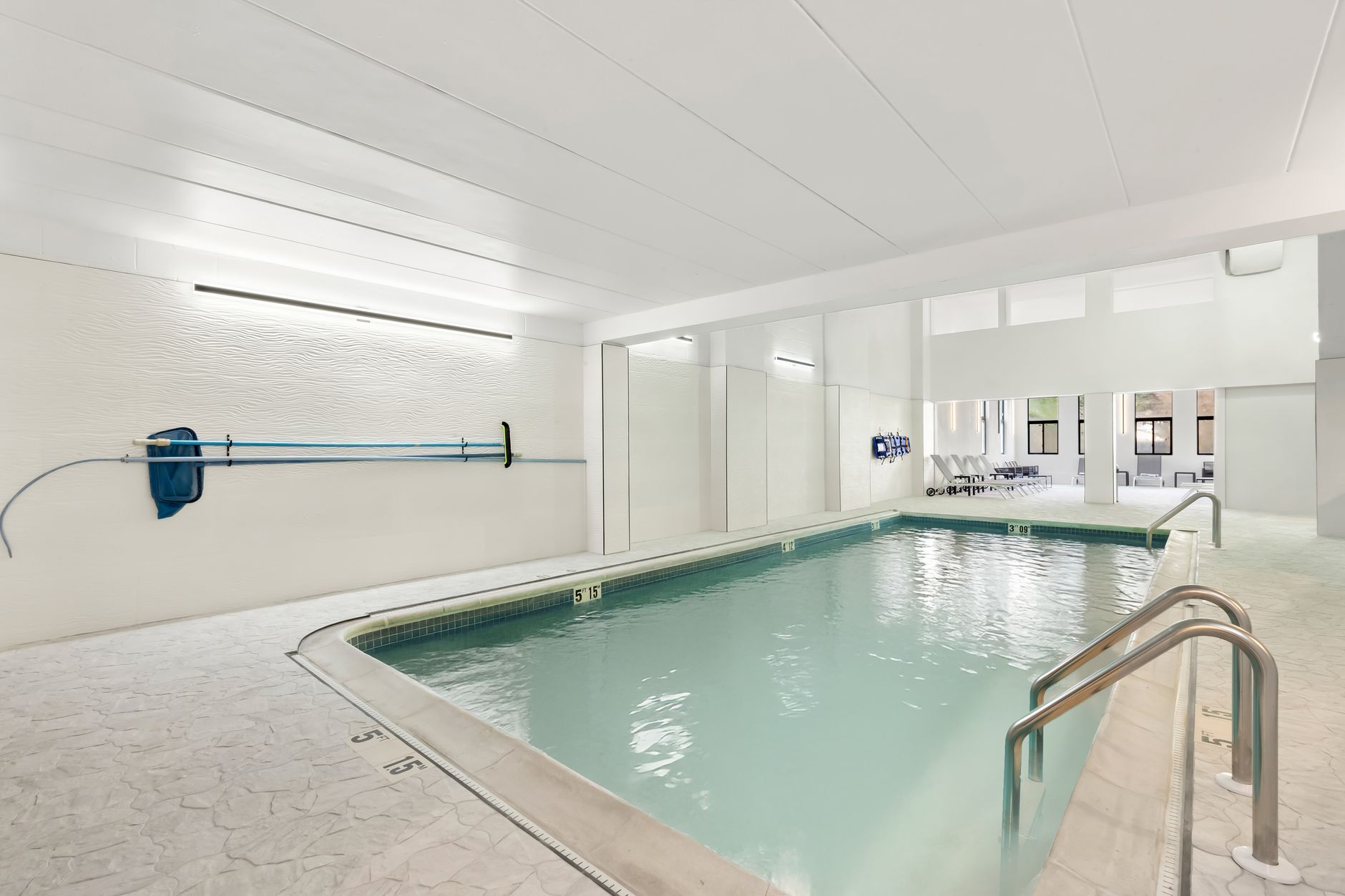
The air in a pool hall combines very high relative humidity, close to saturation near the water, and chloramines resulting from the reaction between treatment chlorine and organic matter. This mixture is corrosive to standard electronics: it oxidises contacts, attacks untreated printed circuits and clogs the optical chambers of conventional smoke detectors, causing false alarms or, conversely, loss of sensitivity. An ordinary optical smoke detector, designed for an office environment, has its service life greatly reduced in this context. This is why the design of detection in a pool hall cannot replicate the solutions used in the rest of the building (changing rooms, dry technical rooms, reception): it must start from the principle that the environment is permanently aggressive, not only during peak attendance periods.
Which detectors and IP ratings are suitable for a pool hall environment?
Detectors installed in a pool hall must have a protection rating of IP65 minimum, or even IP66 or IP67 for areas most exposed to splashes and chlorinated spray. The choice of technology depends on the configuration of the volume to be monitored.
| Technology | Behaviour in pool hall | Typical use |
|---|---|---|
| Standard optical smoke detector | Rapid fouling, false triggers linked to vapour | To be avoided in pool hall |
| IP65/66 optical detector with protected chamber | Resists ambient humidity, enhanced maintenance | Peripheral areas of the hall |
| Linear beam optical detector | Covers large ranges, little sensitive to localised vapour | Large volumes, significant height |
| Aspirating detection | Detection head located outside humid zone, tubes in hall | Halls with high corrosive constraint |
| Heat detector | Little disturbed by vapour, but slower reaction | Complement in heat risk zone |
Aspirating detection has the advantage of being able to place the sensitive element (the aspiration unit) in a dry technical room, away from chlorinated air, with only the sampling tubes passing through the pool hall.
Which materials should be favoured for housings and cabling in aquatic environments?
Detector and base housings intended for a pool hall must be made of materials resistant to chlorine corrosion, typically marine-grade stainless steel (grade 316L) or treated ABS with anti-corrosion and UV protection if the hall benefits from significant natural lighting. Cable glands and fittings must also achieve an IP68 rating to prevent any infiltration along the cables. The cabling itself must be sheathed with chemical resistance adapted to chlorinated vapours, and intermediate junction boxes must remain accessible for maintenance without heavy dismantling. This material requirement extends to mounting brackets and fasteners: a standard galvanised steel bracket deteriorates rapidly in this type of atmosphere and can compromise the mechanical stability of the detector over time, well beyond the electronic issue alone.
How should detection be installed in a high-ceiling pool hall?
The installation of detection in a pool hall must take into account the large volume and ceiling height, which favour smoke stratification before it reaches a detector placed only on the ceiling. Standard NBN S 21-100-1 governs the design of detection installations, including in atypical volumes, and requires the design office to adapt the number and position of detection points to the actual geometry of the room, not just its surface area. In practice, this often translates into a combination of linear beam detectors to cover the height and complementary detection points at intermediate levels when the hall configuration justifies it. It is also necessary to avoid installing a detector directly in the flow of mixing nozzles, showers or high condensation zones, which distort its reading regardless of its IP protection. Access for maintenance (lift platform, platform) must be anticipated from the design stage, as height makes any intervention more cumbersome.
What maintenance and inspection frequency should be applied in this corrosive context?
The maintenance and periodic inspection of a fire detection installation fall under standard NBN S 21-100-2, which sets out the general procedures for any equipped building. In a pool hall, the chlorinated and humid environment accelerates component wear, which justifies increased vigilance compared to a dry building: more frequent verification of the condition of optical chambers, housings and cable glands, and early replacement of detectors whose service life announced by the manufacturer is reduced for this use. Installed equipment must be BOSEC certified to guarantee compliance with applicable standards, and ANPI publishes useful recommendations for the practical application of NBN S 21-100 standards in particular configurations. The emergency zone may, during its inspections, request proof of this enhanced maintenance in view of the specific environment of the pool hall.