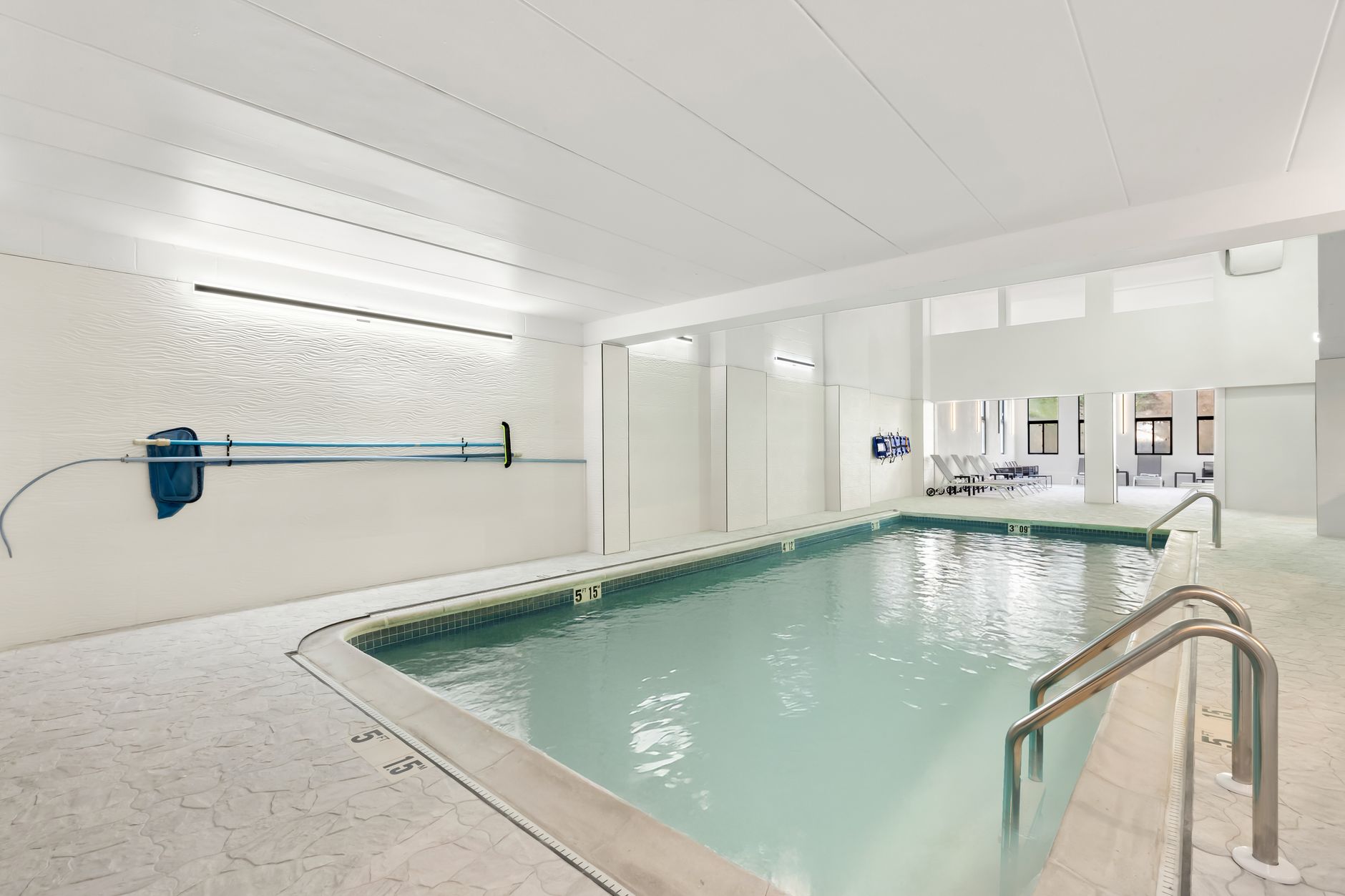
Why do pools and sports halls pose a particular challenge for fire detection?
Indoor pools and sports halls combine three constraints rarely found together elsewhere: permanent humidity that degrades electronic components, significant ceiling heights that delay smoke rising to the detector, and high occasional occupancy during group classes or competitions. These three combined factors require moving beyond the standard optical smoke detector, which is poorly suited to this type of premises. The technical choice is made zone by zone: pool area, sports hall, changing rooms, and technical rooms do not have the same needs. The NBN S21-100-1 standard governs the design and choice of detectors according to the environment, while NBN S21-100-2 sets out the maintenance and periodic inspection procedures, which are particularly demanding in these aggressive environments.
What problems does humidity in indoor pools pose for fire detectors?
The ambient humidity of an indoor pool causes condensation inside conventional smoke detectors, which generates false alarms or, conversely, fouling that reduces their actual sensitivity. Chlorine and water treatment products also accelerate corrosion of electronic contacts. In these areas, preference is given to detectors certified for humid or corrosive environments, with a suitable waterproof housing, or detection is moved to less exposed areas (filtration technical rooms for example) rather than placing it directly above the pool. The choice of equipment must systematically be validated with regard to the room's atmosphere, a point that the installer documents in their technical file. A detector not suited to this type of environment loses its reliability well before the normal end of its lifecycle.
Which detector should be chosen for a high-ceiling sports hall?
In a sports hall exceeding several metres in ceiling height, a conventional optical smoke detector placed on the ceiling detects the fire too late: the smoke must travel a long distance before reaching the sensor, and it dilutes along the way. Complementary solutions are then used: multi-criteria detectors combining smoke and heat to make detection more reliable, or aspiration systems (air sampling detection) that continuously sample air and detect very low smoke concentrations before it even accumulates at ceiling level. The choice depends on the actual height, the building configuration and the identified risk sources (stands, electrical equipment, technical room). This analysis falls under system design, governed by NBN S21-100-1, and must appear in the installation file provided to the operator.
How does high occasional occupancy influence the alarm system?
A sports centre can go from a few people during the day to several hundred during a competition or group class, which radically changes evacuation needs. The alarm system must be audible and visible in all occupancy configurations, including in noisy areas (pool with high reverberation, hall with class music) where a standard sound signal may not suffice. Complementary visual devices are then recommended in these high-noise areas. Evacuating a large public that is sometimes unfamiliar with the premises (occasional customers, school groups, visitors) also requires clear signage and regular evacuation drills, organised with the assistance of the site's prevention advisor. The competent emergency zone (hulpverleningszone) may formulate additional requirements when giving its opinion on the building file.
What does NBN S21-100-2 provide for maintenance in humid or polluted environments?
NBN S21-100-2 sets out the maintenance and periodic inspection procedures for fire detection installations, and this framework takes on its full meaning in a humid environment or one laden with chemicals. A detector continuously exposed to humidity or chlorine becomes fouled and degrades faster than a detector installed in a conventional office: cleaning operations, sensitivity verification and replacement must therefore be anticipated taking into account this accelerated wear, beyond simply complying with the standard schedule. The sports centre operator has an interest in having specific observations for each zone (pool, changing rooms, technical rooms) recorded in the maintenance register, so that the BOSEC-certified maintenance company adapts its interventions rather than applying a uniform frequency to the entire building.
What classification applies to a sports centre according to the Royal Decree of 7 July 1994?
A sports centre is classified like any other building according to its height, following the logic of the Royal Decree of 7 July 1994 establishing basic standards for fire and explosion prevention: low, medium or high-rise building according to size. A single-storey sports complex with a high-ceiling hall is not necessarily a high-rise building in the regulatory sense, the height taken into account being that of the building relative to the access level of emergency services, not the interior height of the hall. This classification determines the applicable fire resistance, compartmentation and evacuation requirements, and therefore indirectly the organisation of fire detection. The building's safety file must specify this classification, verified by the emergency zone during its opinions and inspections.
Comparative table of detectors suitable for sports centres
| Detector type | Principle | Suitable zone | Main limitation |
|---|---|---|---|
| Standard optical smoke | Light scattering in an optical chamber | Offices, reception, dry rooms of standard height | False alarms in humid environments, late detection at great height |
| Multi-criteria (smoke + heat) | Combination of two principles to make triggering more reliable | Sports halls, stands | Higher installation cost |
| Thermal (heat) | Triggering on threshold or rate of temperature rise | Technical rooms, saunas, boiler rooms | No early detection of smoke alone |
| Aspiration system (ASD) | Continuous air sampling analysed by a central sensor | Great height, sports halls, difficult-to-access areas | More complex installation and maintenance |