What regulations apply to a sports centre in Belgium?
A sports centre open to the public (swimming pool, multi-purpose sports hall, fitness centre) is a building accessible to the public within the meaning of the Royal Decree of 7 July 1994 establishing basic standards for fire and explosion prevention. This decree classifies buildings into three categories according to their height: low-rise building, medium-rise building and high-rise building. Most sports centres fall under the low-rise building category, as their development is mainly horizontal, except when a stand or an administrative floor exceeds the height threshold. This classification determines the requirements for compartmentation, evacuation and, indirectly, the organisation of detection. The operator's prevention adviser must identify this category before any technical choice, as it structures the entire safety file transmitted to the competent emergency zone (hulpverleningszone).
How does humidity around pools influence the choice of detectors?
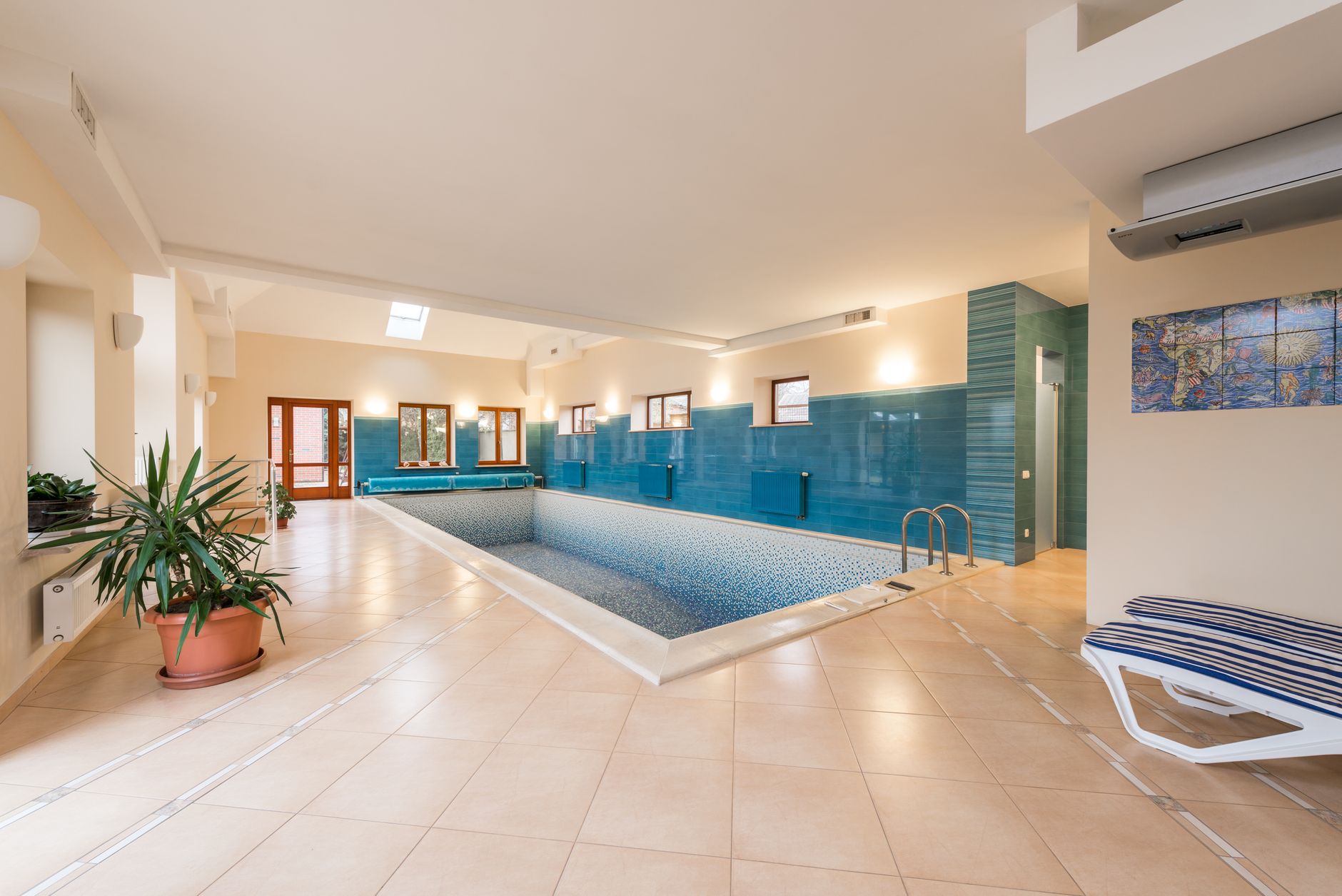
Ambient humidity around swimming pools prevents the use of conventional unprotected optical smoke detectors, as condensation and chlorinated spray cause false alarms or rapid degradation of components. In these areas, heat detectors or optical detectors with reinforced protection rating against humidity are preferred, mounted in sealed housings adapted to the chlorinated atmosphere. The water treatment technical room, often the most sensitive point of an aquatic centre, requires specific detection due to the presence of chemicals and live electrical equipment. The installation must also take into account mechanical ventilation, which rapidly dilutes smoke and delays detection if air vents are not considered in the calculation of coverage zones. These technical choices fall under standard NBN S21-100-1 for system design.
How to cover a large volume such as a sports hall?
A sports hall is characterised by a significant ceiling height and considerable air volume, which dilutes smoke before it reaches a conventional point detector installed too high. In these configurations, commonly adopted solutions are linear beam optical detection, which monitors an axis between a transmitter and receiver along the entire length of the hall, or aspirating detection, which continuously samples air via a network of tubes for analysis in a sensitive control unit. The choice depends on the actual height, the presence of structures (stands, technical walkways) that create shadow zones, and sources of interference such as dust or lighting. The installation study must be carried out by an installer trained in standard NBN S21-100-1, which specifies coverage calculation rules according to the type of detector selected and the configuration of the volume to be protected.
What specific requirements apply to changing rooms and showers?
Changing rooms and showers combine high intermittent humidity, variable occupancy and often combustible materials (wooden or plastic lockers, benches). Steam from showers can trigger false alarms on a poorly positioned smoke detector, which leads to favouring a heat detector in areas directly exposed to steam, and an optical smoke detector in adjacent circulation and storage areas. Installation must avoid direct air flows from ventilation outlets or hair dryers, which delay or distort detection. Sports equipment storage rooms, often adjacent to changing rooms and loaded with combustible materials, require coverage at least equivalent to that of common circulation areas. These choices must remain consistent with the detection zoning plan validated during system design.
What standard governs the design and maintenance of the installation?
The design and installation of a fire detection system in a Belgian sports centre follow standard NBN S21-100-1, while its maintenance and inspection fall under standard NBN S21-100-2. These two texts define the rules for zoning, choice of detectors according to the environment (humidity, dust, large volumes) and the frequency of maintenance operations. Installed equipment should preferably have BOSEC certification, which attests to its compliance with European standards and facilitates its acceptance by the emergency zone during inspections. The ANPI organisation can be consulted for technical opinions on particular configurations, notably large volumes or chemically aggressive environments specific to swimming pools. A formalised maintenance contract with a qualified installer remains the best guarantee of reliability in these demanding environments.
Who inspects the installation and how frequently?
Periodic inspection of a fire detection installation in a sports centre accessible to the public is carried out by the territorially competent emergency zone (hulpverleningszone), which verifies the system's compliance with the Royal Decree of 7 July 1994 and its adequacy with the building's safety file. Routine technical maintenance follows the requirements of standard NBN S21-100-2 and must be performed by a qualified professional according to a frequency adapted to the type of equipment and operating environment. In a sports centre, humidity and intensive use of premises justify increased vigilance on the condition of detectors placed in humid zones, whose service life may be reduced compared to a conventional tertiary installation. The building's safety register must keep a record of each maintenance visit and each inspection carried out by the emergency zone.