Why do theatres and performance venues present a particular fire risk?
A theatre or performance venue combines three factors that increase fire risk compared to a standard tertiary building: a high fire load (wooden and painted canvas sets, curtains, foam props, costumes), a stage cage that promotes vertical smoke propagation, and a large audience seated in darkness during performances. Added to this is dense stage electrical installation (spotlights, dimmers, lifting machinery) which constitutes a frequent ignition source. Detection must therefore be designed zone by zone, not only for the auditorium where the public is located. It is this combination of combustible load, complex technical volume and high-density occupation that justifies stricter requirements than for a standard office or retail building.
What is the stage cage and why does it complicate detection?
The stage cage (or fly tower) refers to the vertical volume above the stage floor, where sets, spotlights and backdrops are suspended. This volume acts as a chimney: in case of fire starting on stage, heat and smoke rise rapidly into the fly tower before spreading. This effect requires two complementary technical responses. On one hand, dedicated smoke extraction for the stage cage, generally through roof vents, to evacuate smoke and heat without them descending back into the auditorium. On the other hand, detection capable of reacting quickly in a high-volume space, where smoke takes longer to reach a point detector installed too low. The building's risk analysis must take into account this specific configuration, typical of venues equipped with a proscenium stage.
What is the role of the stage fire curtain?
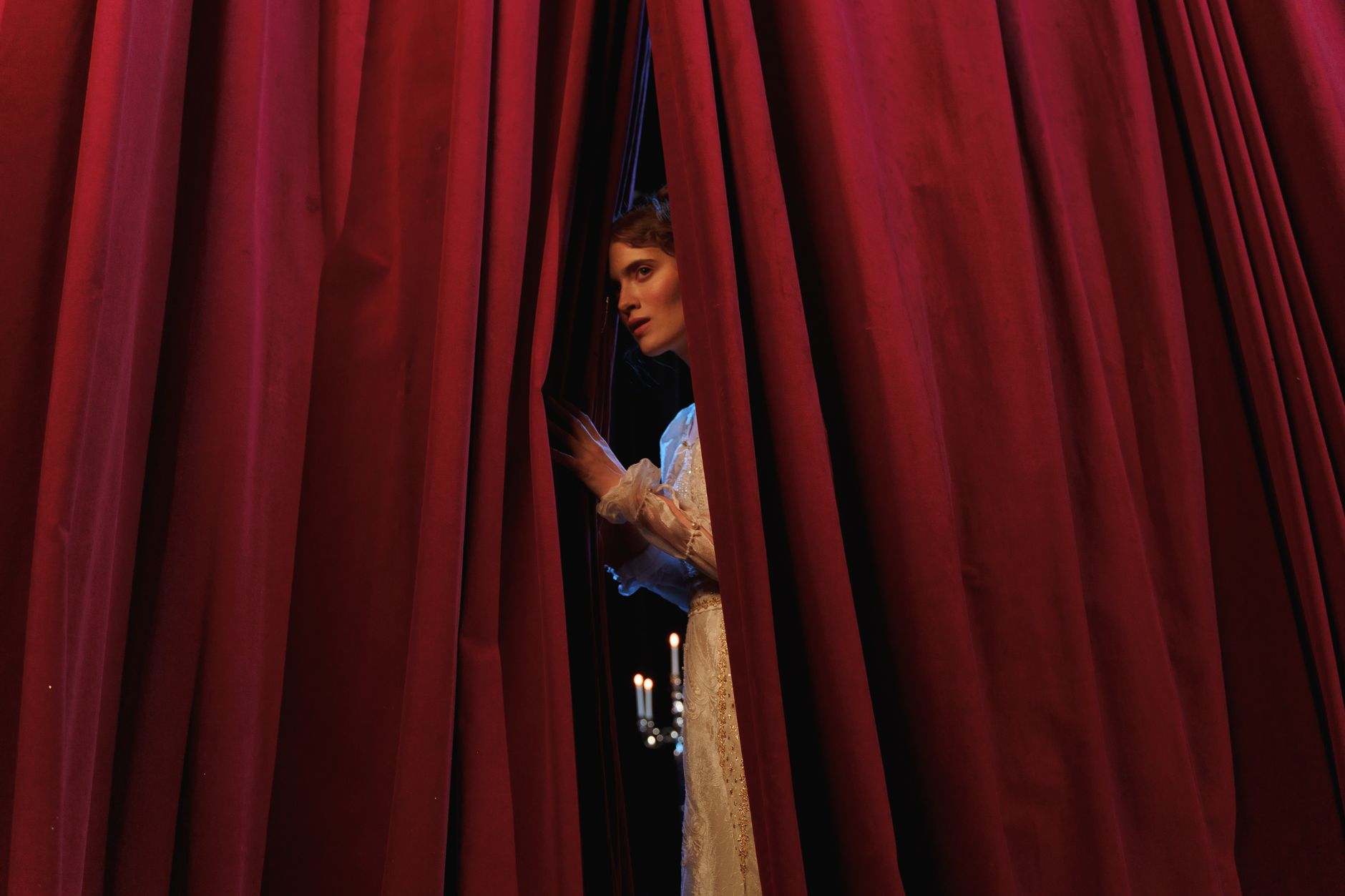
The stage fire curtain physically separates the stage floor, where risk is concentrated (combustible sets, machinery, lighting), from the auditorium where the public is located. Its objective is to prevent fire and smoke propagation toward spectators during the time necessary for evacuation. This curtain must be able to close automatically upon fire detection, as well as manually from an accessible control station. Its proper functioning depends directly on the reliability of the detection system that controls it: a curtain that does not descend, or descends too late, loses all utility. This is why the connection between detectors in the stage zone and the curtain's automation system is among the points verified during periodic inspections of the installation, just like other safety interlocks in the building.
What does the Royal Decree of 7 July 1994 provide for this type of building?
The Royal Decree of 7 July 1994 establishing basic standards for fire and explosion prevention applies to theatres, performance venues and cinemas as to any building accessible to the public, according to their classification as low, medium or high-rise building based on height. It imposes general requirements for compartmentation, evacuation routes, smoke extraction and fire detection proportionate to the risk and building occupation. For a performance venue, dense occupation and the presence of a technical stage reinforce the risk analysis required to determine the extent of detection, beyond the minimum baseline applicable to a standard tertiary building. It is on this basis that the operator, with their prevention advisor, determines the zones to cover as priority.
What does standard NBN S21-100 provide for detection in performance venues?
NBN S21-100-1 establishes the design and installation rules for fire detection systems, while NBN S21-100-2 governs their maintenance and periodic inspection. For a theatre or cinema, application of this standard generally leads to comprehensive detection covering all risk volumes, not only the performance auditorium. The choice of technologies (optical smoke detectors, heat detectors, linear detection) depends on ceiling height, the nature of materials present and the risk of contamination (stage smoke, set dust). The standard also requires traceability of inspections in a register, a document that the emergency zone (hulpverleningszone) may request during a visit.
Which zones should be covered as priority in a theatre or cinema?
Each technical zone of a performance venue presents a different risk profile, which justifies distinct detection choices rather than a single solution for the entire building.
| Zone | Dominant Risk | Generally Adapted Detection |
|---|---|---|
| Auditorium (public) | Slow smoke, reduced visibility in darkness | Optical smoke detectors |
| Stage cage, fly tower | Chimney effect, rapid vertical propagation | Heat or linear detection, coupled with smoke extraction |
| Understage, set storage | Storage of combustible materials | Smoke detection, sometimes automatic suppression |
| Projection booth | Electrical equipment, heat sources | Smoke or heat detection |
| Dressing rooms, backstage | Textiles, makeup lighting | Smoke detectors |
This distribution results from the risk analysis provided for by the Royal Decree of 7 July 1994 and refined according to the design requirements of NBN S21-100-1.
Who inspects the fire detection system of a performance venue and how frequently?
Periodic inspection of the fire detection installation falls under NBN S21-100-2, which organizes verifications and maintenance by a competent service. The operator, often with support from their prevention advisor, must also seek the opinion of the territorially competent emergency zone (hulpverleningszone), which may conduct on-site inspections and require adaptations if occupation or stage configuration evolves (new set, fly tower modifications). A BOSEC-certified detection control panel installed by a competent company facilitates the traceability required during these visits. The building's safety register must maintain the history of inspections, fire curtain tests and system interventions, documents accessible at any time by the emergency zone.
FAQ
Is a multiplex cinema subject to the same rules as a theatre?
Yes in principle: the Royal Decree of 7 July 1994 applies according to the building's classification (low, medium, high-rise) and its occupation, regardless of whether it is a theatre or cinema. A cinema generally has no stage cage or stage fire curtain, but public density and darkness impose the same requirements for rapid detection and evacuation.
Is the fire curtain mandatory in all performance venues?
Its requirement depends on the building's configuration, particularly the presence of a stage cage separated from the auditorium. The risk analysis conducted within the framework of the Royal Decree of 7 July 1994 determines whether this device is required for the venue concerned.
Who verifies the fire detection system of a performance venue?
Periodic inspection falls under the requirements of NBN S21-100-2, performed by a competent service. The emergency zone may additionally conduct its own visits and request consultation of the building's safety register.
Is specific detection required for theatre sets stored on-site?
Set storage areas often contain significant quantities of combustible materials (wood, textile, foam). Risk analysis generally leads to providing dedicated smoke detection there, separate from that of the auditorium.
What does an operator risk if the fire curtain is not functional?
A defective safety device constitutes a breach of the basic standards of the Royal Decree of 7 July 1994. The emergency zone may, during its opinion or an inspection, require compliance restoration before any opening to the public.