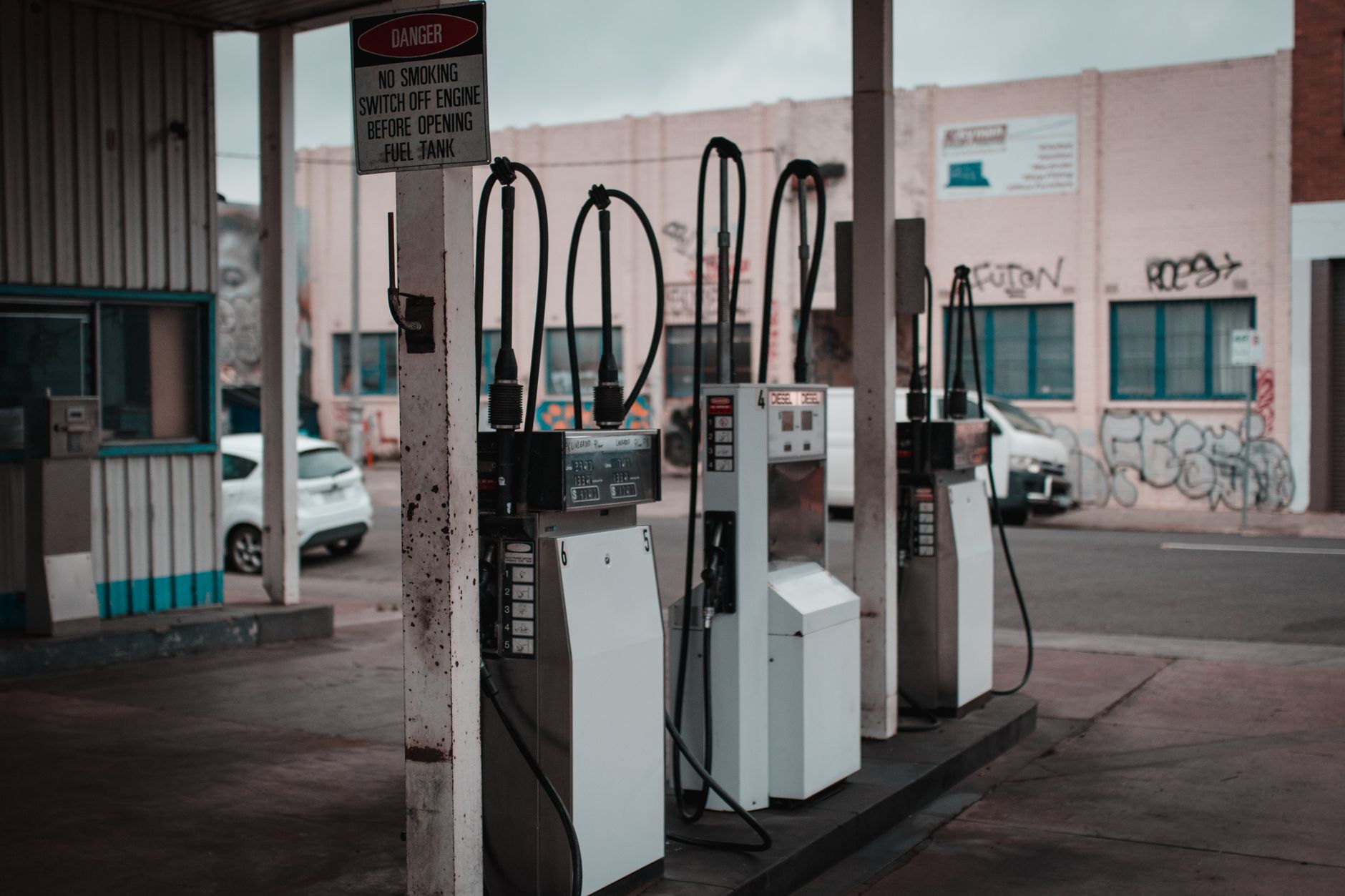
What Belgian regulatory framework applies to a petrol station or fuel depot?
A petrol station or flammable liquid depot in Belgium falls under several cumulative frameworks, none of which exempts from the others. The building itself, if it includes premises (shop, technical room, covered canopy), must comply with the Royal Decree of 7 July 1994 establishing basic standards for fire and explosion prevention, with its classification into low, medium or high-rise buildings according to height.
The activity of storing and distributing fuel then falls under the environmental permit, issued at regional level, which imposes sector-specific conditions for flammable liquid installations (tanks, unloading areas, safety distances). Finally, zones where an explosive atmosphere may form fall under ATEX regulations, transposed into Belgian law in the Code on Well-being at Work. The territorially competent emergency zone (hulpverleningszone) provides an opinion on the project and carries out inspections.
What is an ATEX zone and why does it concern fire detection?
An ATEX zone is a zone where an explosive atmosphere consisting of a mixture of air and flammable vapours can form in sufficient quantity to ignite. In a petrol station, the areas around fuel nozzles, the interior of tanks, inspection manholes and unloading areas typically constitute such zones, classified according to the frequency and duration of the explosive atmosphere's presence (zones 0, 1 and 2 for gases and vapours).
This classification directly determines the choice of detection equipment. Any device installed in an ATEX zone, including a fire detector, must be Ex-certified (marking attesting its compliance with regulations relating to explosive atmospheres). An uncertified detector can itself become an ignition source, through sparking or heating, which would completely reverse its protective function.
What detection technologies are suitable for flammable vapours?
Flammable fuel vapours do not produce visible smoke before ignition: detection therefore relies on measuring the combustible gas itself or on flame detection, not on smoke. Several technologies coexist depending on the site configuration.
| Technology | Principle | Typical use |
|---|---|---|
| Point catalytic detector | Measures a percentage of the lower explosive limit (LEL) | Technical room, pump room, confined space |
| Point infrared detector | Infrared absorption of gas, without catalytic combustion | Zones where catalytic detector becomes fouled or poisoned |
| Linear infrared barrier | Detection over an optical path between transmitter and receiver | Unloading area, perimeter of outdoor tanks |
| UV, IR or multi-spectrum (IR3) flame detector | Identifies characteristic radiation of a flame | Distribution canopy, ventilated outdoor zone |
The choice depends on the volume to be monitored, the site's natural ventilation and the ATEX classification of the zone concerned.
Are conventional smoke detectors usable in a flammable liquid depot?
Conventional optical or ionisation smoke detectors, designed for smouldering fires in enclosed spaces, are not suitable for fuel storage and distribution zones. A hydrocarbon pool fire develops very quickly, without a detectable smoke phase before ignition, and outdoor or widely ventilated zones (petrol station canopy, unloading area) disperse any trace of smoke before it reaches a point detector.
These spaces require a combination of combustible gas detection (to anticipate a leak before ignition) and flame detection (to react as soon as a fire appears). Confined interior technical rooms may fall under point gas detection supplemented by conventional fire detection if the room warrants it. The precise choice always depends on the site-specific risk analysis, which must be documented.
Who inspects and maintains the detection installations of a petrol station?
Maintenance and periodic inspection of fire detection installations follow the principles of standard NBN S 21-100-2, which covers the maintenance of detection systems regardless of the sector of activity. For an ATEX-risk site, this maintenance must additionally take into account the Ex certification of the equipment: replacing a component with an uncertified part causes the entire system to lose compliance.
The equipment itself may bear BOSEC certification, attesting its compliance with applicable standards, and ANPI acts as the technical reference body in Belgium. The competent emergency zone (hulpverleningszone) inspects the site's compliance as part of its duties, in connection with the conditions set by the environmental permit. The operator's prevention adviser ensures documentary follow-up between these various inspections.