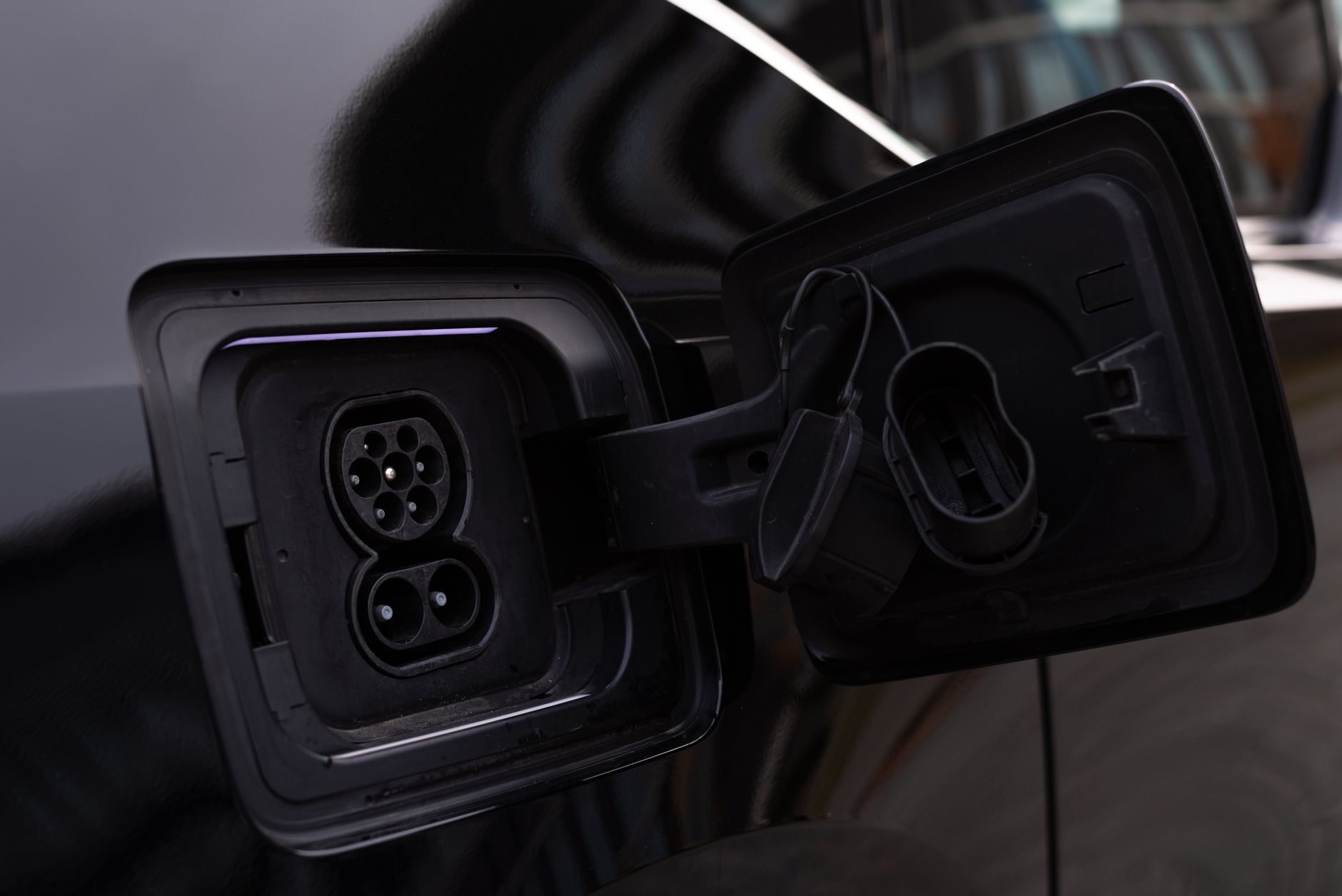
Why do electric charging areas present a particular fire risk in a car park?
A fire involving a lithium-ion battery in thermal runaway releases very intense heat, toxic and flammable gases, and can reignite several hours after apparent extinction. This phenomenon differs markedly from a conventional vehicle fire.
In a closed or semi-closed car park, this dynamic complicates early detection: the air volume is often large, mechanical ventilation rapidly dilutes the first traces of smoke, and conventional point detectors may react too late, once flames are already visible. The challenge is therefore not only to detect a fire, but to detect warning signs (abnormal heating of a charging station, cable or vehicle being charged) before flames appear. It is this requirement for speed that guides the choice of technologies around charging areas.
Which early detection technologies are recommended around charging stations?
No single technology covers the entire risk: detection around charging stations generally combines several complementary principles, from the most localised to the most global.
| Technology | Principle | Benefit in charging area | Limitation |
|---|---|---|---|
| Thermal detection (heat-sensitive cable or point detectors) | Reacts to localised temperature rise | Detects heating of a station or cable before ignition | Less effective in large unconfined volumes |
| Optical point smoke detection | Reacts to combustion particles | Basic detection, widespread in closed car parks | Rapid dilution in ventilated volume, sometimes late detection |
| Aspirating smoke detection (ASD) | Continuously aspirates air to a highly sensitive control unit | Detects minute traces of smoke, suited to large volumes and airflows | More complex installation, more demanding maintenance |
| Gas / battery precursor detection | Sensors sensitive to gases emitted during thermal runaway | Alert before any visible smoke, complementary to other systems | Still emerging technology, not covered by a Belgian standard specific to car parks |
These technologies complement rather than replace each other: thermal detection targets the station itself, smoke detection monitors the car park volume.
How to integrate detection from charging areas into the existing fire detection system of the car park?
Integration is achieved by creating one or more addressable detection zones dedicated to charging spaces, distinct from the rest of the car park, connected to the existing control panel in accordance with the design principles of standard NBN S 21-100-1. Each charging zone must be precisely identifiable by the control panel, so that emergency response is directed straight to the relevant location.
This integration also requires a functional link with the car park's smoke extraction system: detection in a charging zone must be able to trigger mechanical smoke extraction ventilation for the relevant zone, not just an audible alarm. Compartmentation between the charging zone and the rest of the car park, where it exists, must also be consistent with the division of detection zones. The Royal Decree of 7 July 1994 establishing basic fire safety standards governs the general design of closed car parks (compartmentation, smoke extraction, detection) but does not specifically address electric charging areas, whose implementation is assessed case by case.
What role does aspirating smoke detection play in a car park with electric charging?
Aspirating smoke detection (ASD) consists of continuously sampling small volumes of air via a network of tubes, for analysis in a highly sensitive control unit. It becomes relevant in car parks with charging stations precisely because these volumes are often large and ventilated, a context where conventional point detectors lose effectiveness.
Its main benefit is to detect traces of combustion very early, before a fire is visible, providing valuable anticipation time against battery thermal runaway whose evolution can be very rapid once triggered. It is generally proposed as a complement to localised thermal detection on the stations themselves, not as a replacement: ASD covers the volume, thermal detection covers the hot spot. The final choice depends on the car park configuration (height, air change rate, number of stations) and must be discussed with the design office and, where applicable, the building's insurer.
Who validates the implementation of detection in a car park with charging stations?
The territorially competent emergency zone (hulpverleningszone) issues an opinion on the fire safety devices of a building, including car parks equipped with charging stations, and carries out periodic inspections once the installation is in service. Its opinion covers in particular the consistency between the division of detection zones, compartmentation and smoke extraction.
For an existing car park being equipped with charging stations, it is recommended to consult the emergency zone from the design phase, even before choosing detection technologies, rather than once works have begun. This avoids costly modifications if the emergency zone requires a redesign of detection zones or reinforcement of local smoke extraction. The operator's prevention advisor also has a role in this internal validation, in connection with the Code on Well-being at Work (Book III, Title 3) for aspects relating to workplaces. The installation itself must comply with the design principles of standard NBN S 21-100-1.
What maintenance is required for detectors installed in charging areas?
Maintenance of detectors installed in charging areas follows the general principles set by standard NBN S 21-100-2, which governs the maintenance and periodic inspection of fire detection installations, including individual verification of each detector and control panel inspection.
These areas nevertheless present particular constraints: temperature variations linked to charging cycles, road dust, proximity to live cables. Thermal detection heads and ASD sampling points must be inspected taking this specific environment into account. The precise frequency of inspections depends on the maintenance contract concluded with the BOSEC-certified installer, the insurer's requirements and any requirements specified by the emergency zone. A maintenance contract that does not distinguish charging areas from the rest of the car park risks underestimating the necessary verification frequency for these sensitive points.