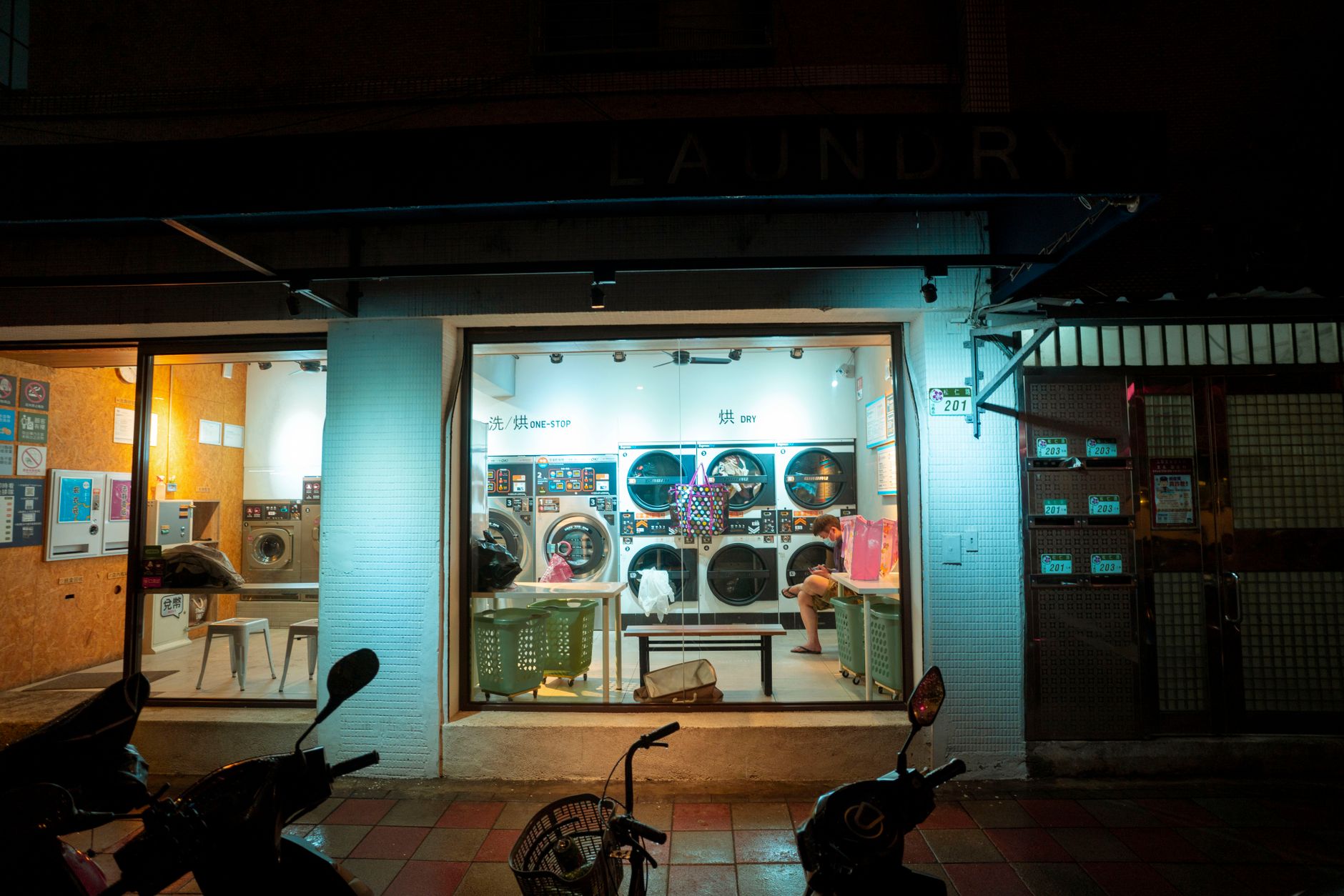
What are the specific fire risks in an industrial laundry?
An industrial laundry or dry cleaning facility combines three risk factors rarely found together elsewhere: a high combustible load (textiles, cardboard, lint), permanent heat sources (dryers, calenders, irons) and cleaning products that are sometimes flammable or reactive. This combination explains why this type of establishment regularly features among industrial sites where fire starts in a localized manner before spreading very quickly along hot air circuits and dryer exhaust ducts.
The establishment's prevention advisor must consider the laundry as a particular risk area within the meaning of the Royal Decree of 7 July 1994 establishing basic standards, which justifies reinforced compartmentation between the washing area, the drying area and clean or dirty linen storage areas, in order to limit propagation in the event of a fire outbreak.
Why are dryers and heating systems hot spots to monitor?
Industrial dryers and ironing calenders operate at temperatures sufficient to ignite textile lint accumulated in filters, ducts or poorly maintained bearings. This is the most frequently observed cause of fire outbreak in this sector, well before the classic electrical fault.
A poorly maintained dryer, whose lint filter is not cleaned between each cycle, sees its internal temperature rise on contact with a material jam, which can cause ignition without visible flame before smoke appears. Regular mechanical maintenance of this equipment (filter cleaning, bearing inspection, extraction duct monitoring) is therefore a prerequisite for any fire detection strategy: a detector, regardless of its quality, never replaces a properly maintained dryer.
How does textile lint promote fire spread?
Textile lint is an extremely reactive fuel: light, dry and dispersed in the air, it ignites quickly and spreads fire by air along ventilation ducts and false ceilings. Once suspended, it acts almost like combustible dust.
This dispersion poses a double problem for fire detection. On one hand, lint clogs classic optical smoke detectors, which wears out their sensors and causes drift over time. On the other hand, a cloud of suspended lint can trigger a false alarm in a poorly positioned optical detector, without any actual fire outbreak. Dust management is therefore a selection criterion as important as detection sensitivity itself.
Which cleaning products represent a fire or explosion risk?
Certain cleaning products used in laundries or dry cleaning facilities are flammable or release vapors that can, under certain conditions, form an explosive mixture with air. This is particularly the case for certain solvents historically used in dry cleaning, but also for stain removers and degreasing products stored in large quantities.
Their storage must comply with ventilation, distance from heat sources and compartmentation rules provided by workplace regulations, notably the Code on Well-being at Work, Book III, Title 3, dedicated to fire prevention in the workplace. A poorly ventilated cleaning product storage room, located near a dryer or boiler, combines an ignition risk and a toxic risk in case of temperature rise, which justifies dedicated detection for this area, separate from that of the main workshop.
What type of detector should be chosen to avoid false alarms in this context?
The choice of detector in an industrial laundry must reconcile early smoke detection and resistance to lint dust, without generating false alarms related to ambient heat or humidity. No single detector perfectly covers these three constraints alone.
| Detector type | Advantage in laundry | Limitation in laundry |
|---|---|---|
| Optical smoke detector | Early detection of visible smoke | Rapid clogging by lint, possible false alarms |
| Thermal detector | Insensitive to dust and humidity | Later detection, unsuitable in high combustible load areas |
| Multi-criteria detector (combined smoke and heat) | Reduction of false alarms by signal crossing | Higher cost and maintenance |
| Aspiration detection (air sampling) | Very early detection, possible dust filtration | More complex installation and maintenance, requires rigorous filter maintenance |
In drying and ironing areas, a multi-criteria detector or aspiration detection with filtration is generally preferable to a simple optical detector, as it limits unwanted triggering while maintaining sufficient sensitivity.
Where should detectors be installed in a laundry or dry cleaning facility?
Detector installation must clearly distinguish risk areas (dryers, calenders, cleaning product storage) from passage areas or clean linen storage, each requiring adapted technology and installation height. This distinction is at the heart of standard NBN S 21-100-1, which governs the design and installation of fire detection systems in Belgium.
In the immediate vicinity of dryers and extraction ducts, a thermal detector or detection device in the duct itself limits false alarms related to normal operating heat. In linen storage areas and corridors, a classic optical detector remains relevant, provided it is positioned away from hot air flows and passage areas where lint deposits most. The cleaning product room itself justifies dedicated detection and, depending on the nature of stored products, consideration of room ventilation.
What regulatory obligations apply in Belgium for these establishments?
An industrial laundry or dry cleaning facility is subject, like any Belgian professional building, to the Royal Decree of 7 July 1994 establishing basic standards for fire and explosion prevention, which classifies buildings according to their height (low, medium, high) and sets compartmentation and evacuation requirements. The fire detection installation, when required, must comply with standard NBN S 21-100-1 for design and standard NBN S 21-100-2 for maintenance and periodic inspection.
The Code on Well-being at Work, Book III, Title 3, also requires the employer to conduct a fire risk analysis specific to the workplace, which includes drying areas and chemical product storage. The competent emergency zone (hulpverleningszone) can be consulted upstream of an installation or transformation project, and carries out on-site inspections. Installed equipment should ideally be BOSEC certified, the Belgian reference certification for fire detection equipment.
Should automatic suppression be provided in risk areas?
Automatic suppression may be justified in high combustible load areas of an industrial laundry, particularly at dryer level and large-quantity linen storage areas, where fire spread speed leaves little time for human intervention. The decision depends on the building-specific risk analysis and the classification adopted under the Royal Decree of 7 July 1994.
This choice requires a specific technical study, conducted with a qualified installer and, where appropriate, in consultation with the competent emergency zone and the ANPI organization, which can be involved in the site's fire risk assessment. Automatic suppression never replaces reliable early detection: it is a complement, not a replacement.