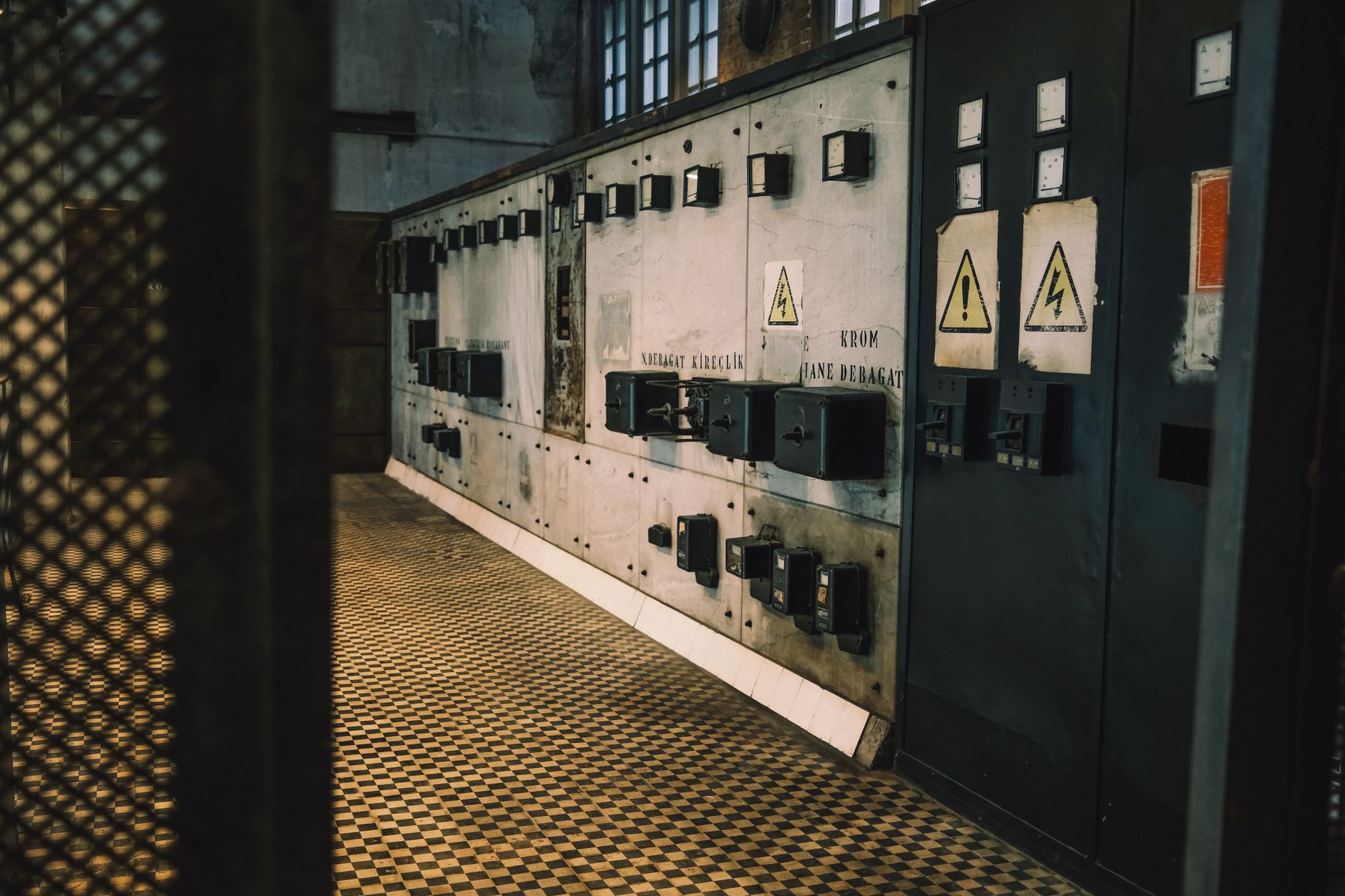
Why do electrical technical rooms present a particular fire risk?
An electrical technical room (main switchboard, transformer substation, power cabinet) concentrates a high current density, connection points that heat up over time, and combustible materials (cable insulation, ducts) in a volume that is often closed and poorly ventilated. Fire outbreak is usually slow: a terminal heating up or the beginning of insulation carbonisation generates smoke well before any flame.
This type of room is generally classified as a room with particular risk in the building's fire risk analysis, whether it is a low, medium or high building within the meaning of the Royal Decree of 7 July 1994 establishing basic standards. The Code on Well-being at Work (Book III, Title 3) also requires the employer to identify these areas in their risk analysis and to adapt detection and intervention means accordingly.
Which detection technology should be chosen for an electrical room?
The choice of technology depends on the expected fire development speed and the environment (dust, vibrations, air currents from forced ventilation of transformers). A conventional optical smoke detector is rarely suitable alone in these rooms, as it reacts too late to a smouldering fire and can become clogged.
| Technology | Principle | Sensitivity | Typical use in electrical room |
|---|---|---|---|
| Optical smoke detector | Light scattering in a chamber | Standard | Secondary rooms, low equipment density |
| Multi-criteria detector | Combines smoke and temperature | Medium to high | Distribution cabinets, ventilated rooms |
| Linear heat detection | Sensitive cable along its entire length | Localised on hot spot | Cable trays, busbars |
| Aspirating smoke detection | Continuous aspiration to a central detector | Very high, early | Main switchboards, transformers, adjacent server rooms |
The combination of several technologies, validated in the risk analysis, remains the most robust solution for these critical volumes.
What is aspirating smoke detection and why is it suitable for technical rooms?
Aspirating smoke detection (ASD) consists of continuously sampling air from the room via a network of perforated pipes and analysing it in a highly sensitive detection unit, capable of identifying combustion particles well before they are perceptible by a conventional point detector.
This early warning is decisive in a main switchboard or transformer room: a connection heating up can smoulder for hours before any flame, and timely electrical shutdown often prevents propagation. ASD also better tolerates the specific constraints of these rooms: ventilation or cooling air flows, dust, vibrations from power equipment, which disturb conventional point detectors.
The design of the aspiration network (pipe length, number of sampling points, air transport time to the unit) must be studied for the specific volume and configuration of the room, in accordance with the design principles of NBN S21-100-1.
What design rules does NBN S21-100-1 impose for these rooms?
NBN S21-100-1 sets out the design and installation principles for fire detection systems in Belgium, including for rooms with particular risk such as electrical rooms. It notably requires that detection zoning allows unambiguous identification of the room concerned from the control panel, so that the intervention team immediately knows where to act.
The standard also requires that detector installation takes into account the nature of the risk identified in the building's risk analysis: a transformer room justifies earlier and denser detection than an ordinary storage room. The electrical supply to the detection system must remain guaranteed even in the event of a main switchboard outage, which requires a dedicated backup source separate from the main switchboard it monitors.
Room accessibility for detector maintenance, often limited for electrical safety reasons (isolation, authorisation), must also be anticipated from the design stage.
Should automatic suppression be provided in an electrical room?
Automatic suppression is not systematically required in an electrical technical room, but it is strongly recommended when the building's risk analysis identifies a critical issue: operational continuity, inability to quickly de-energise, or absence of permanent human presence to respond to an alarm.
In these rooms, water is not suitable as long as equipment remains energised: preferred solutions are clean gaseous agents (which do not damage electronics) or very fine water mist, usable after power shutdown. The choice of extinguishing agent must take into account the room volume, the presence of personnel nearby and compatibility with the protected equipment.
This decision falls within the building's risk analysis, carried out with the prevention adviser, and can be discussed with the competent emergency zone (hulpverleningszone), which provides an opinion on the site's fire protection measures.
What maintenance should be applied to detection in these high-risk rooms?
NBN S21-100-2 sets out the maintenance and periodic inspection requirements for fire detection systems, and these requirements fully apply to electrical rooms, with increased vigilance due to the severe environment (dust, heat, electromagnetic fields).
A point detector located in a main switchboard becomes clogged faster than elsewhere: its sensitivity threshold must be regularly checked by a qualified technician, as part of a maintenance contract covering the entire installation. For aspirating smoke detection, the inspection also covers the aspiration flow rate in each pipe, which can decrease if a filter becomes clogged.
This monitoring must be recorded in the installation register, a document that the emergency zone may request during a periodic building inspection. A poorly maintained detector in an electrical room loses the early warning advantage that justified its installation.