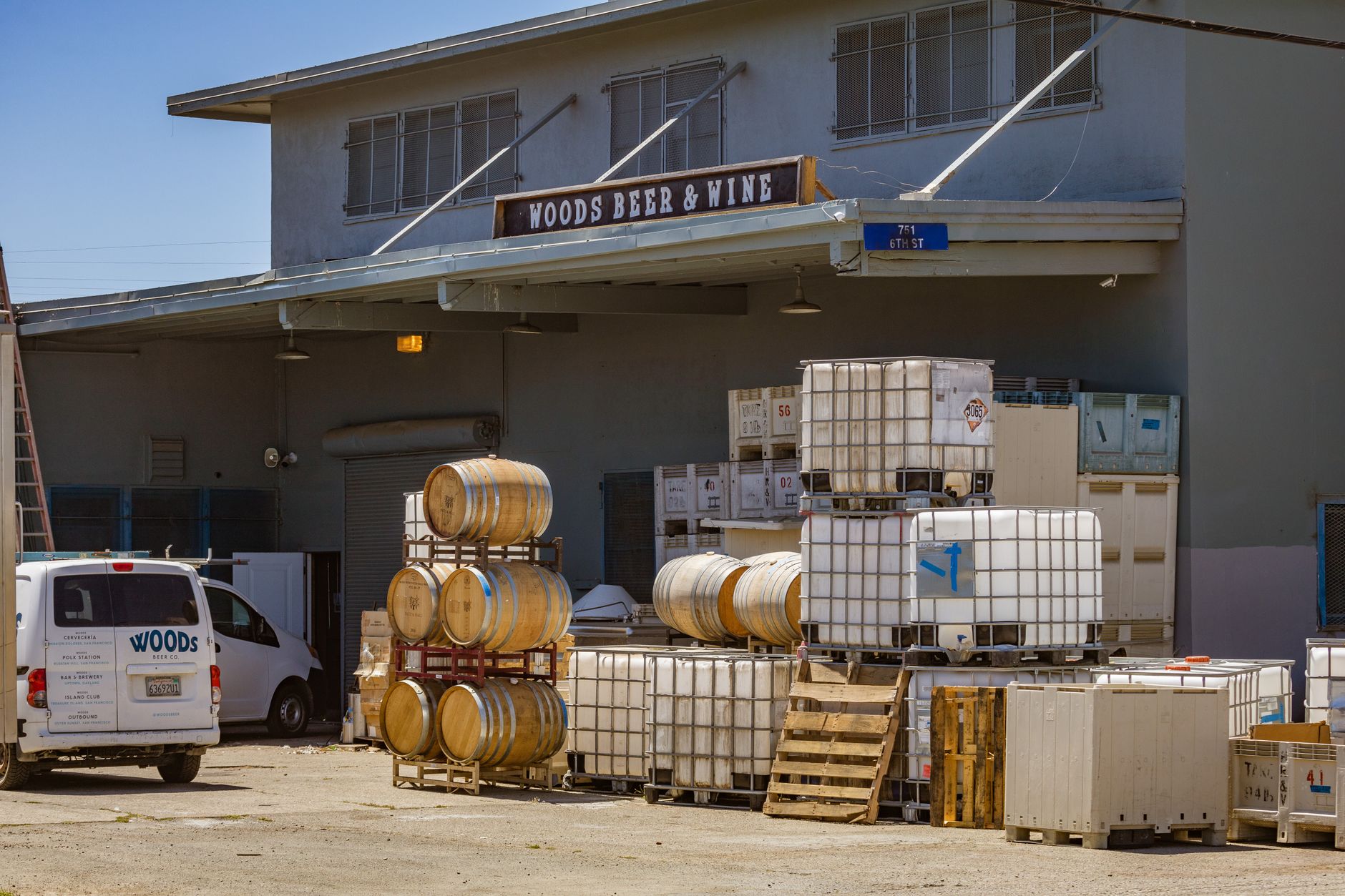
What specific risks does an outdoor storage site for pallets, wood or vehicles pose?
An outdoor storage site combines a high fire load (wood, pallets, tyres, vehicle fuels), the absence of any compartmentation, permanent exposure to weather and vandalism, and a risk of rapid spread from one stack to another through thermal radiation. Unlike an enclosed warehouse, smoke immediately disperses into the open air: a conventional point smoke detector, designed for an enclosed volume, has no effectiveness there.
Detection must therefore rely on other physical principles: radiated heat, infrared or ultraviolet radiation from flames, or thermal image analysis. The main risk is not only the fire outbreak itself, but the propagation time before a team intervenes, often longer outdoors than inside a continuously monitored building. It is this gap that detection must bridge, by raising the alarm as early as possible after ignition.
Which detection technologies work in an uncovered space?
Three families of detectors are suitable for outdoor use: linear heat detection, thermal cameras and flame detectors (optical UV or IR). Each responds to a different physical phenomenon, allowing them to be combined according to the site configuration.
Linear heat detection relies on a temperature-sensitive cable stretched along storage stacks or circulation aisles: it triggers an alarm as soon as any point on the cable exceeds a temperature threshold, and allows approximate location of the fire source. Thermal cameras continuously analyse an infrared image of the monitored area and detect an abnormal hot spot before visible flames even appear, making them a particularly useful early detection tool over large areas. Flame detectors respond to the optical radiation characteristic of combustion and offer almost instantaneous detection, but over a more restricted field of view.
How do these technologies compare with each other?
The choice depends on the area to be covered, the required detection speed and the operating budget, as these three technologies do not meet the same needs.
| Technology | Detection principle | Typical range | Strengths | Limitations |
|---|---|---|---|---|
| Linear heat detection | Heat-sensitive cable along stocks | Linear, along cable length | Approximate fire source location, weather-resistant | Only covers the area where cable is installed |
| Thermal camera | Continuous infrared image analysis | Wide surface area, depending on optics | Early detection, overall vision, useful at night | Higher cost, requires fine tuning to avoid false alarms |
| Flame detector (UV/IR) | Optical radiation from combustion | Limited conical field of view | Very fast reaction to flame | Sensitive to visual obstacles, restricted field |
On a large outdoor storage site, these technologies are often combined rather than substituted for one another.
How are safety distances between storage stacks determined?
Separation distances between stacks of pallets, wood or between rows of vehicles aim to limit fire spread through thermal radiation from one stack to another, and to leave practicable access for intervention vehicles from the emergency zone (hulpverleningszone). There is no single distance applicable to all sites: it depends on the height of stocks, the nature of the fuel, wind exposure and the configuration of access routes.
This analysis generally falls to the operator's prevention adviser, in consultation with the competent emergency zone, which may issue an opinion on the site organisation as part of its operating authorisation. The principle to remember is simple: the more circulation aisles and buffer zones between storage islands are clear, the more propagation is slowed and the faster emergency services can intervene. This division into limited-size zones also reduces the volume exposed to a single incident.
How is outdoor detection integrated with the site's indoor detection?
Outdoor detection must never operate as an isolated system: it must report to the same fire detection control panel as the one managing the building interior, so that the alarm is processed, displayed and transmitted centrally. This centralisation prevents an outdoor incident from going unnoticed due to lack of continuous supervision in a peripheral area of the site.
In practical terms, linear detection loops, thermal cameras and flame detectors are connected as separate zones on the control panel, in accordance with the design principles of standard NBN S 21-100-1, which governs the design and installation of fire detection systems in Belgium. The outdoor alarm triggers the same processing chain as the indoor alarm: local signalling, reporting to a monitoring station if the site has one, and transmission to the emergency zone according to the arrangements provided for the entire site. This integration also allows correlation of an outdoor event with the status of indoor exits and accesses.
What specific maintenance is required for equipment exposed to weather?
Outdoor detection equipment requires more frequent maintenance than indoor detection, as it is continuously exposed to rain, frost, dust and UV radiation. Inspection and maintenance follow the principles of standard NBN S 21-100-2, which governs maintenance operations for fire detection installations in Belgium, with particular attention paid to cleaning thermal camera optics and verifying the integrity of linear detection cables.
It is recommended to verify that equipment installed outdoors has a protection rating suitable for weather conditions and, where relevant, BOSEC certification, guaranteeing compliance with Belgian requirements. Regular visual inspection of housings, cable glands and mounting brackets complements periodic functional tests, to prevent corrosion or moisture ingress from rendering a detector inoperative when it would be needed.