Do photovoltaic panels really increase the fire risk of a building?
A poorly designed, poorly installed or poorly maintained photovoltaic (PV) installation adds a specific fire risk to the roof; it does not replace the existing risk of the building, it is superimposed on it. The direct current (DC) produced by the panels does not interrupt in the same way as the alternating current of the grid: an insulation fault or a loose connector can sustain a prolonged electric arc, a source of local heating. Added to this is the presence of cables, junction boxes and inverters placed on or under a roof often composed of combustible materials (insulation, waterproofing membrane). The prevention adviser must integrate this risk into the overall analysis of the building, in the same way as other technical installations on the roof.
What are the specific hot spots of a photovoltaic installation?
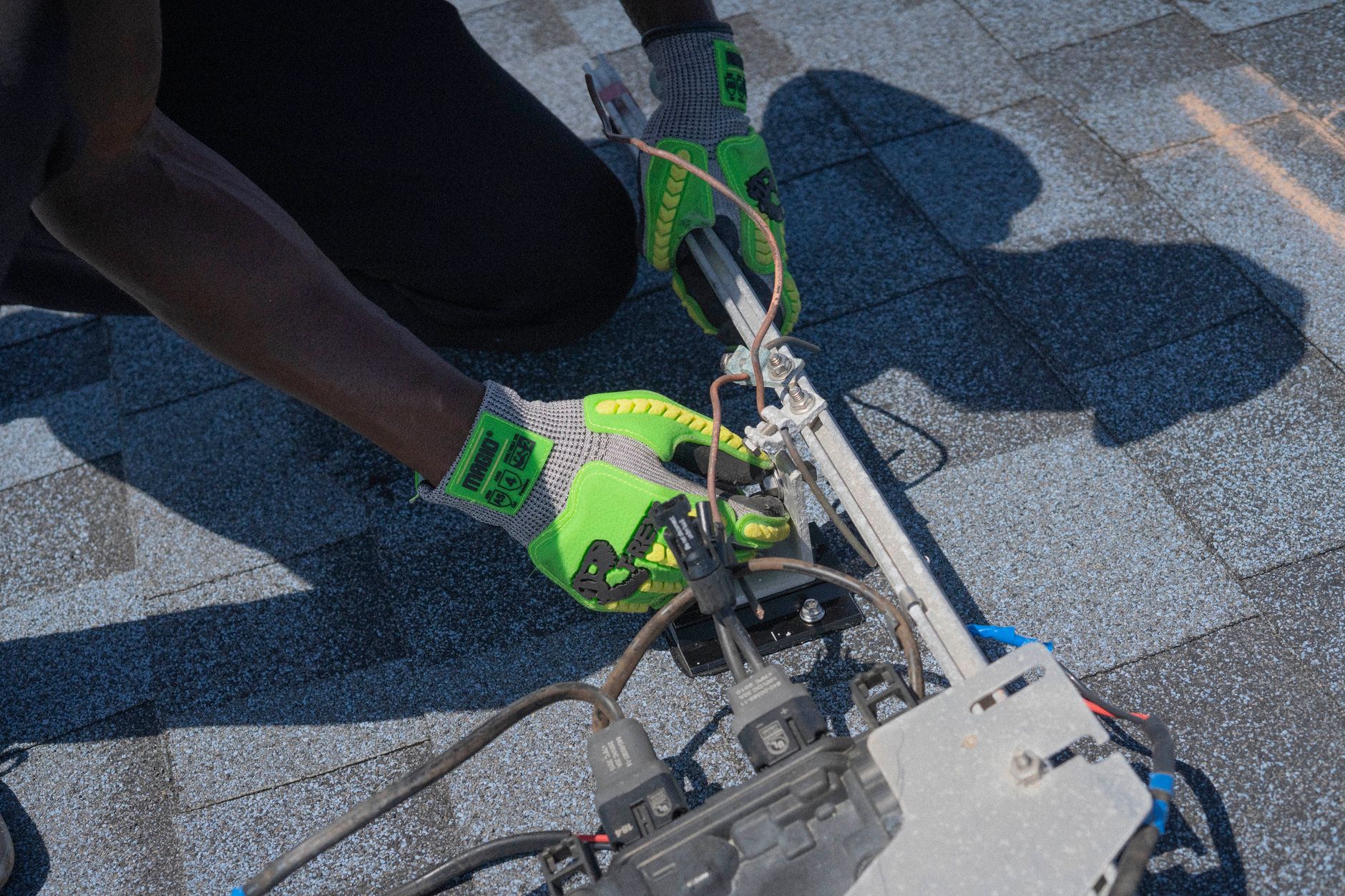
The hot spots of a PV installation are concentrated on the connection and current conversion elements, not on the panels themselves, which rarely remain the primary cause of a fire outbreak. Feedback on this type of installation systematically points to the same areas of vigilance:
- DC connectors (MC4 type or equivalent), subject to oxidation and loosening under the effect of thermal cycles
- junction boxes located at the back of the panels, difficult to access for visual inspection
- inverters, which convert direct current into alternating current and concentrate high electrical density
- fixing points where the wiring rubs against the metal structure of the roof
These areas heat up gradually before any visible flame, which makes early detection decisive.
How does PV wiring complicate fire detection on roofs?
Photovoltaic wiring complicates fire detection because it often runs in a technical void, under the panels, inaccessible to the eye and poorly covered by conventional point detection. A smoke detector installed on the underside of the roof or in a technical room will not necessarily see the smoke that accumulates directly under the panels, in the open air on the outside. The heating of a connector or cable can smoulder for several hours before producing smoke detectable by a conventional sensor. This is why the risk analysis must distinguish the technical roof (inverter rooms, indoor cable ducts) from the exposed area (under the modules, outdoors), which is more a matter of thermal monitoring than traditional smoke detection.
How to adapt the fire detection system to a roof with PV panels?
Adapting fire detection to a PV roof involves combining several technologies depending on the area concerned, rather than generalising a single type of detector. The choice depends on the accessibility of the wiring and the configuration of the building, to be defined according to the design principles of standard NBN S21-100-1.
| Area | Dominant risk | Adapted detection |
|---|---|---|
| Inverter room | Electrical heating, arc | Point or multi-criteria smoke detector |
| Indoor DC cable duct | Progressive hot spot | Linear thermal detection or aspiration |
| Technical void under panels (outdoor) | Oxidised connector, DC arc | Targeted thermal monitoring, reinforced visual rounds |
| Accessible technical roof | Propagation to structure | Conventional building detection, adapted to NBN S21-100-1 distances |
The existing detection control panel of the building can integrate these areas as a dedicated sector, with an identified alarm report to facilitate location by the fire services.
What impact do PV panels have on firefighter access and intervention on roofs?
Photovoltaic panels modify roof access for firefighters because they occupy the available surface and maintain an electrical voltage even after the general grid is cut off, as long as daylight produces direct current. Emergency zones (hulpverleningszones) generally require the maintenance of circulation paths free of panels, to allow movement on the roof and access to cut-off devices. A PV emergency switch (or rapid cut-off device), clearly signposted and accessible from outside the building, limits the residual voltage in the DC cables during an intervention. This point must be verified with the competent emergency zone during the design of the project, and not discovered at the time of intervention.
What maintenance obligations apply to a photovoltaic roof from a fire perspective?
The maintenance of a photovoltaic roof from a fire perspective falls within the general detection maintenance obligations, set by NBN S21-100-2, and in the risk analysis imposed by the Code on Well-being at Work (Book III, Title 3) for fire prevention in the workplace. Concretely, this involves periodic visual inspection of accessible connectors and boxes, occasional thermographic verification of connection points during electrical maintenance operations, and integration of the PV area into the building's safety register. The person responsible for fire detection maintenance, BOSEC certified, must be informed of the presence of the PV installation to adapt their inspection points. ANPI can also be consulted for aspects related to roof design and compatibility with the building classification within the meaning of the Royal Decree of 7 July 1994.