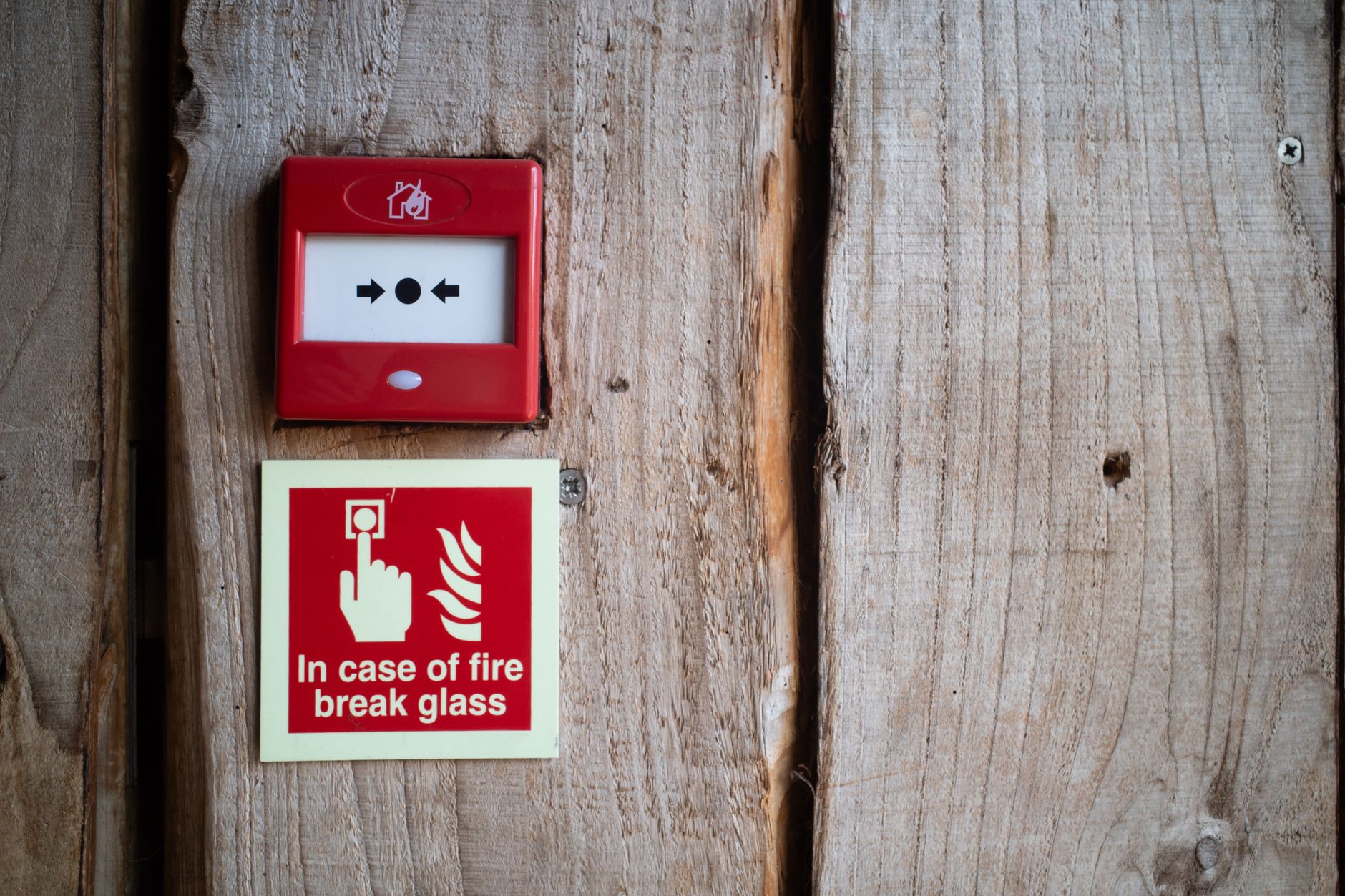
What is the fire alarm control panel and who uses it on a daily basis?
The fire alarm control panel (TS) is the central component of the fire detection system: it indicates zones in alarm, faults and the general status of the system. A repeater panel (TRE) reproduces this information at another location in the building, often at reception or the security post, so that information is visible even if the main TS is located far from the entrance.
On a daily basis, it is rarely all workers who consult this panel. In most buildings, only a few designated persons (receptionist, technical officer, site manager) are required to interpret it when a signal appears. The standard NBN S21-100-1, which governs the design and installation of fire detection systems in Belgium, refers to the notion of a person responsible for operation, without making it a universal function assigned to all personnel.
What is the difference between training on the panel and the role of the fire safety supervisor?
The fire safety supervisor (préposé à la surveillance) performs an organisational mission: ensuring permanent presence, raising the alarm, coordinating initial actions and liaising with the emergency zone (hulpverleningszone). Training on the fire alarm control panel is purely technical: it teaches how to read an indicator light, identify a zone, acknowledge a signal, and reset the system after intervention.
A fire safety supervisor does not therefore automatically have the technical skills to operate a TS or TRE, and conversely, a person trained to read the panel does not necessarily have the responsibilities of a supervisor. In practice, these two profiles often overlap in small organisations, but they are two distinct competencies to be verified separately: one relates to the organisation of workplace safety, the other to mastery of specific technical equipment, unique to each installation and each control panel brand.
How does this training differ from evacuation drills?
Evacuation drills concern all personnel present in the building: they test collective behaviour, compliance with evacuation routes and assembly time at the designated point. Training on the fire alarm control panel targets a limited number of designated persons and focuses on a specific technical action, not collective behaviour.
In other words, an evacuation drill can take place perfectly well without anyone touching the fire alarm control panel, since its triggering is often simulated verbally or via the general alarm. Conversely, training on the panel can be conducted in a classroom, with the control unit switched off, without mobilising all personnel. Confusing the two leads to gaps: personnel who know how to evacuate but do not know how to isolate a faulty zone, or vice versa.
Who must be trained to use the fire alarm control panel?
Persons who may find themselves alone facing the panel when a signal occurs must be trained: receptionist, security officer, technical manager, prevention adviser, and any person designated by the operator as a reference person outside technical service hours. In a healthcare facility or apartment building with permanent staffing, this includes night duty personnel.
The number of persons trained depends on the building's organisation: a site with continuous presence requires several trained reference persons to cover shift rotations, whereas a small office building may limit itself to two or three persons. The objective remains constant: that a competent person be available to react correctly, regardless of when the alarm is triggered.
How frequently should personnel be trained or retrained?
There is no single mandatory frequency for training on the fire alarm control panel: it must be provided when the system is commissioned, then repeated after any significant modification (zone extension, control panel replacement, addition of detectors). It is the installer, generally BOSEC certified, who provides this initial training.
In addition, regular refresher training is recommended whenever there is a change in designated personnel, or after a long period without an incident requiring use of the panel. Emergency zones (hulpverleningszones) and prevention advisers often insist on an annual refresher in practice, but this is a matter of internal organisation and not an obligation specified by a single text. What matters is that each designated person remains capable of reacting without hesitation when the signal occurs.
How should this technical training be organised in practice?
Technical training on the fire alarm control panel is organised in several simple stages, provided by the installer or prevention adviser in support.
- 1.Initial training provided by the installer during system commissioning, with demonstration on the actual control unit.
- 2.Provision of a written procedure, displayed near the panel, describing the meaning of indicator lights and the procedure to follow.
- 3.Periodic practical test: simulation of a trigger to verify that the designated person knows how to acknowledge, identify the zone and reset.
- 4.Recording of each session in the building's safety register, with the list of trained persons.
- 5.Update of training after any modification to the system reported as part of periodic inspections required by NBN S21-100-2.
Comparative table of the three systems
| System | Target audience | Main objective | Who organises it |
|---|---|---|---|
| Training on TS/TRE panel | Designated persons (reception, technical, security) | Read and correctly operate the control unit | BOSEC-certified installer |
| Fire safety supervisor | One or more persons designated by the operator | Coordination, alert, liaison with emergency zone | Operator / prevention adviser |
| Evacuation drill | All personnel present | Test collective behaviour and routes | Operator, with support from prevention adviser |