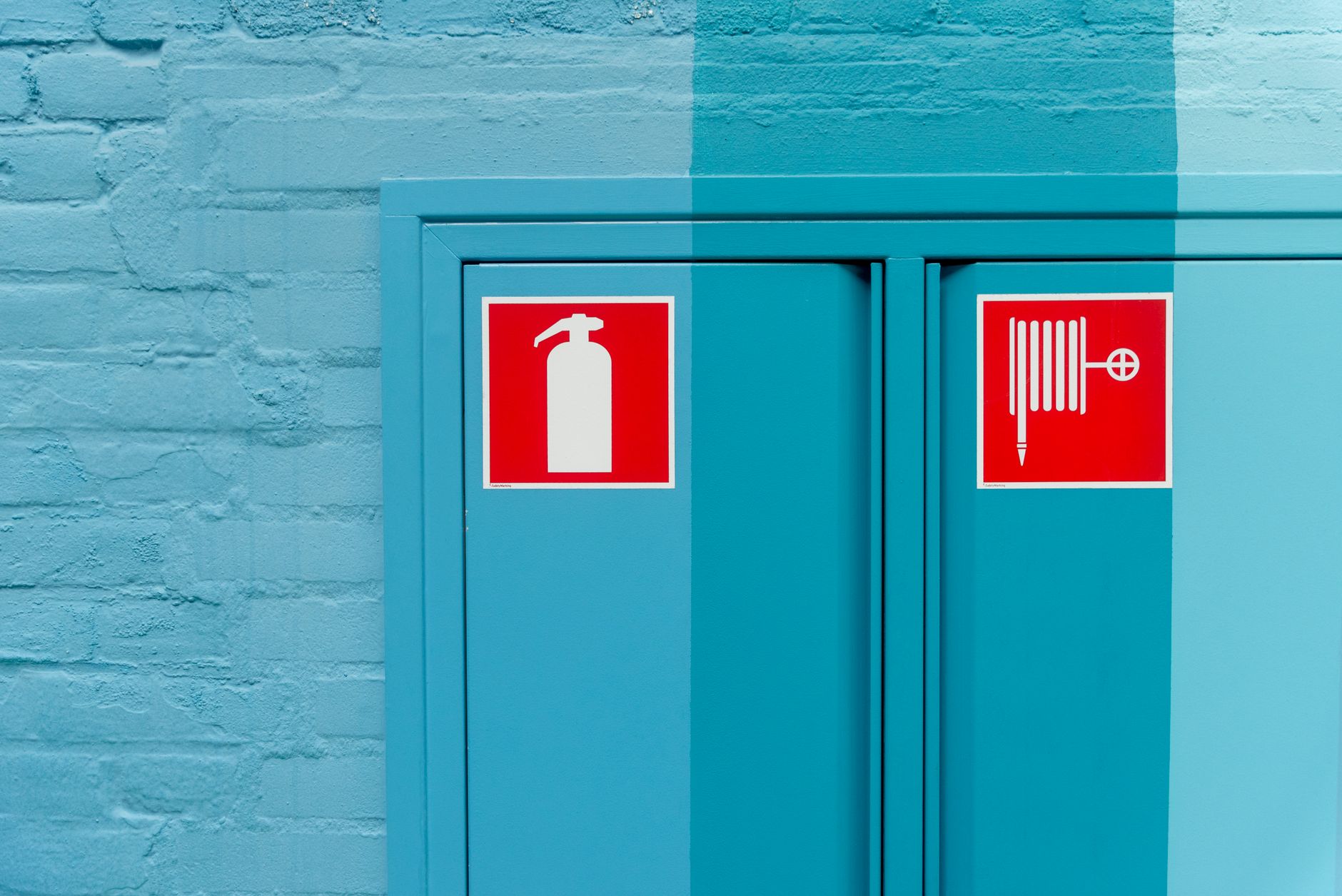
Who must be appointed as fire safety officer?
The fire safety officer is a worker (or, in certain buildings, a member of the operating staff) appointed by name by the employer or operator to carry out a mission of vigilance and first response in the event of a fire starting or an alarm being triggered. This appointment is part of the Code on Well-being at Work (Book III, Title 3, devoted to fire prevention in the workplace), which requires the employer to organise surveillance adapted to the building's risks.
The number of officers to be appointed is not fixed by a single figure: it depends on the risk analysis carried out by the prevention adviser, the size of the building, its classification according to the Royal Decree of 7 July 1994 (low, medium or high-rise building) and the number of occupants present at any given time. A continuously occupied site, with several buildings or several levels, requires in practice several officers distributed by zone or by team.
What training must the officer receive?
The training of the fire safety officer must enable them to recognise an alarm signal, locate the incident from the indication panel and apply the evacuation procedure specific to the building. It covers at least knowledge of evacuation routes, use of first-aid firefighting equipment and conduct to be followed with regard to persons with reduced mobility or occupants unable to evacuate alone.
This training is initial, then refreshed at regular intervals to take account of changes to the building, staff or equipment. It is based on evacuation drills organised periodically under the Code on Well-being at Work, which test the actual response of officers and adjust the procedure if necessary. The competent emergency zone (hulpverleningszone) may be involved in these drills and provides observations during its opinions and inspections.
What are the officer's specific duties during an alarm?
The fire safety officer intervenes at three distinct moments: before the alarm, during the alarm and after the emergency services' intervention. Each phase corresponds to specific tasks, defined in the building's internal procedure and recorded in the safety register.
| Phase | Officer's duties |
|---|---|
| Before the alarm | Know the premises, evacuation routes, assembly points and location of firefighting equipment |
| During the alarm | Verify the reality of the incident on the indication panel, guide evacuation, ensure no person remains trapped, never use lifts |
| Reception of emergency services | Present themselves to the emergency services, provide useful information (affected zone, persons present, plans) |
| After the intervention | Participate in debriefing, report observed anomalies, record facts in the safety register |
This distribution avoids improvisation at the critical moment and gives each officer a clear role, known to all staff.
What is the link between the officer and the safety register?
The safety register is the document that records the organisation of the building's fire prevention: appointment of officers, dates of training and refresher courses, reports of evacuation drills, inspections and maintenance of the detection system. It constitutes the written record that the emergency zone may request during a periodic inspection.
The appointment of a fire safety officer has value only if it is recorded in this register, with the date of appointment and the training received. In the event of an incident, the register demonstrates that the organisation provided for by the Code on Well-being at Work was actually in place, and not merely theoretical. It is also the reference document for verifying that the number of officers remains adapted to changes in the building's occupation.
What is the link between the officer and the fire safety system (SSI)?
The fire safety officer must know how to read and interpret the information displayed by the fire safety system, in particular the indication panel of the detection control panel installed in accordance with standard NBN S 21-100-1. This reading enables them to identify the triggering zone even before the emergency services arrive and to direct their action accordingly.
In certain buildings, the officer is also authorised to manually operate equipment linked to the SSI, such as smoke extraction or door control, when the internal procedure provides for this. This coordination between the human role of the officer and the automatic operation of the SSI must be tested during evacuation drills, and not left solely to the installer's technical documentation.
How many officers must be appointed in a building?
The number of fire safety officers is not fixed by a single numerical threshold in Belgian regulations: it results from the risk analysis specific to each building. This analysis takes account of the building's classification according to the Royal Decree of 7 July 1994 (low, medium or high-rise), the number of occupants, the presence of staff at night or at weekends, and the configuration of the premises (several levels, several wings, several occupying entities).
The prevention adviser determines this number in consultation with the operator, and adjusts it if the building's occupation changes. A building continuously occupied by several teams generally requires an appointment per team, so that a trained officer is always present, including outside standard office hours.